The College of Family Physicians of Canada (CFPC)

The College of Family Physicians of Canada CFPC

The College of Family Physicians of Canada (CFPC), often called the voice of family medicine in Canada, is the professional association responsible for setting standards for the training, certification, and education of family physicians. It has stood as a champion for the well-being and needs of the family medicine specialty, family physicians, and their patients since its incorporation in 1968. Its duties include accrediting postgraduate family medicine training programs in Canadian medical schools, conducting the certification exam for graduating family medicine residents, and granting its members the certification (CCFP) and fellowship (FCFP) designations.

To ensure that medical practitioners who wish to specialize and practice in family medicine are up to the task, the CFPC organizes an exam that grants Certification in The College of Family Physicians of Canada (CCFP) to those interested. The certification verifies that the physicians who hold it meet the standards required to practice family medicine in Canada.

Physicians who hold the CCFP are highly valued as it signifies that they have completed an accredited family medicine residency program, displayed comprehensive knowledge and clinical skills, and passed the CFPC exam. Passing the exam shows that they can safely and effectively practice family medicine.

Who is eligible to write the exam

To be eligible for the Certification Examination in Family Medicine, candidates must complete a family medicine residency from a CFPC-accredited program with at least 24 months of training or an equivalent program in specific countries with similar accreditation standards, including the U.S., U.K., Australia, and Ireland. Dual certification is possible for those who wish to pursue certification in two specialties, but only if directly supervised by the family medicine program director.

Eligibility requirements include CFPC resident membership, completion of an accredited medical degree and post-graduate training, recommendation from a postgraduate director, and verification of credentials by the Medical Council of Canada (MCC) if obtained outside Canada. Candidates must have completed at least 18 months of their 24-month program, i.e., 75% of extended training to sit the exam, with all requirements completed within three years of passing.

CFPC members must be up-to-date with membership fees as it can take up to 72 hours to process, and credential verification must be submitted to the MCC eight weeks before the exam. They must have completed a minimum of 5 years of full-time active family practice with at least two years of continuous full-time active practice immediately preceding the date of the application.

Additionally, applicants must submit references from two colleagues who are licensed and in good standing from the same jurisdiction as the applicant; one of these references must be a certified member of the CFPC.

Pathways to CCFP

Physicians looking to obtain CFPC certification can approach through one of three ways.

First, a Canadian or International medical graduate who completes a CFPC-accredited (or its equivalent) family medicine residency program and meets the other eligibility requirements can apply directly for the exam.

Next is the Practice-Eligible Route. Family physicians who are already practicing in Canada (did not complete an accredited residency but have the relevant experience) may apply to become eligible for the CCFP through the practice-eligible route. These candidates must have substantial family medicine practice and may need to complete an assessment before taking the exam.

Exam Structure

The examination will take place in two days, with one of its two main components occurring each day. The first is the written short-answer management problems (SAMPs). This section uses 100 computer-based multiple-choice questions to assess your decision-making and clinical management skills across various family medicine scenarios. The exam is four hours in length. After this comes the Simulated Office Oral (SOO), a one-hour and fifteen-minute interview where you are asked five questions that test interpersonal and communication skills and clinical reasoning in simulated patient interviews.

It is heavily recommended that you practice and prepare diligently to be ready for the exam, as the questions can be difficult. That’s where CanadaQBank comes in; it contains 288 of the best simulated CFPC SAMP cases that cover different topics from the tested subject areas. It also has 30 of the best CFPC SOO cases, with brief questions and answers that could be asked by the examiner during each patient scenario.

Candidates can take the exam through one of two methods. You can take it in person at the Prometric Testing Center or through a remotely proctored internet-enabled private location of your choice. To go the second route, you must provide a computer with a camera, microphone, and a stable internet connection. These are to ensure that the Prometric proctor overseeing the examination process can guarantee you pass the exam on your own merit.

Be aware that for an optimal testing experience, it is recommended that your computer has a screen resolution of at least 1920 x 1080 at 100% scaling. This is because Prometric’s ProProctor application offers remote exams, which function optimally according to the stated resolution.

Application/Scheduling

The CFPC organizes the certification exam twice a year, in the spring and fall, in multiple centers around Canada and in both official languages. The application process is quite streamlined. First, you must ensure you have no outstanding membership fees due with the CFPC, as unpaid fees will prevent access to the exam application portal.

Next, you apply online through the CFPC portal and take note of how you want your exam to be taken. The icon for the in-person exams is in a different position than the icon for remote exams. The application period is typically open for four months: January to April and July to October. Late applications are not accepted, so it’s best that you plan ahead to avoid processing delays.

The third step is to obtain a formal recommendation from the postgraduate director of family medicine or an equivalent institutional officer who can confirm that you met the training requirements.

Regarding the application fees, the CFPC recently announced that they will increase the costs of the exams starting the following spring cycle. They mentioned that the price hike will allow them to continue to provide leading-edge, high-quality, reliable exams. The new fee will be CAD 4,369 for residency-eligible candidates and CAD 5,826 for practice-eligible candidates.

For more detailed information about the CFPC exam and to prepare with high-quality practice questions, visit CanadaQBank for CFPC.

MCCQE Part 1 Exam Dates 2026: What You Need to Know

MCCQE Part 1 Exam Dates 2026

Preparing for the Medical Council of Canada Qualifying Examination (MCCQE) Part 1 is one of the most important milestones for medical graduates planning to practice in Canada. As the updated exam format introduced in 2025 continues into 2026, understanding the exam schedule, registration process, and preparation strategy is essential. This guide breaks down the 2026 MCCQE Part 1 exam dates, explains how to schedule your exam, and highlights how CanadaQBank can support your preparation.

Overview of MCCQE Part 1 Exam Dates 2026

For 2026, the MCCQE Part 1 continues to be offered in three main testing windows throughout the year. While the Medical Council of Canada releases final dates on its official portal, the expected exam sessions for 2026 are:

  • April to May 2026
    Results are typically released about 10–12 weeks after the session ends.
  • August to September 2026
    Results are usually available within approximately 8 weeks.
  • October 2026
    Results are generally released around 8 weeks post-exam.

Each testing window has limited seats, and exam slots fill quickly. Booking early is strongly recommended to secure your preferred date and location. Candidates preparing for these sessions can use CanadaQBank to align their study plan with the upcoming exam windows.

How to Schedule Your MCCQE Part 1 Exam in 2026

Scheduling your MCCQE Part 1 exam is straightforward, but timing is critical. Because availability is limited, early planning can make a big difference. Here’s how to book your exam for 2026:

1. Visit the Official MCC Website

Start by logging into your account on the Medical Council of Canada (MCC) website. This is where you’ll find the most accurate and up-to-date information about exam dates, registration periods, and testing centers.

2. Select Your Preferred Exam Session

Choose from the available 2026 sessions—spring, late summer, or fall—based on how much preparation time you need. Be realistic about your readiness before selecting a date.

3. Register as Early as Possible

MCCQE Part 1 slots are offered on a first-come, first-served basis. Once registration opens, delays can mean losing your preferred testing window or location.

4. Plan Carefully to Avoid Rescheduling Fees

If you need to reschedule, additional fees may apply depending on how close the request is to your exam date. Choosing the right session from the start can help you avoid unnecessary costs.

5. Confirm and Save Your Exam Details

After completing your booking, you’ll receive a confirmation email with your exam date, location, and instructions. Keep this information safe and review it carefully.

By securing your exam date early, you can shift your full focus to preparation rather than logistics.

MCCQE Part 1 Exam Format in 2026

The revised MCCQE Part 1 format, first implemented in 2025, remains in place for 2026. These changes were introduced to streamline the exam and focus on applied medical knowledge.

Key Format Features

  • MCQ-only exam
    The Clinical Decision-Making (CDM) component has been removed.
  • 230 multiple-choice questions
    Questions are designed to assess clinical knowledge, reasoning, and decision-making.
  • Total exam duration: approximately 6.5 hours
    • Two sections of 160 minutes each
    • Optional 45-minute break between sections

This updated structure emphasizes efficiency, core knowledge, and practical application rather than exam endurance.

Why CanadaQBank Is Ideal for MCCQE Part 1 Preparation

Preparing for MCCQE Part 1 requires more than just reading textbooks. You need targeted practice that mirrors the real exam—and that’s where CanadaQBank excels.

Key Features of CanadaQBank for MCCQE Part 1

  • Fully updated and aligned with the latest MCC guidelines and exam format
  • 3,300+ high-quality simulated MCQs covering all major medical disciplines
  • Questions mapped to Dimensions of Care and Physician Activities
  • Customizable tests by subject, system, or competency
  • Multiple test modes: timed, untimed, and tutor mode
  • Detailed explanations that clarify both correct and incorrect options
  • Performance analytics to track strengths, weaknesses, and progress over time
  • Pass guarantee, with up to 3 months of free access if you don’t succeed

CanadaQBank helps you build confidence, improve time management, and strengthen clinical reasoning—exactly what MCCQE Part 1 demands.

CanadaQBank Subscription Pricing

CanadaQBank offers flexible plans to match different study timelines:

  • $125 – 1 month
  • $165 – 2 months
  • $205 – 3 months
  • $280 – 6 months
  • $365 – 9 months
  • $425 – 12 months

These options allow you to choose a plan that fits both your schedule and budget.

Conclusion

With the MCCQE Part 1 format continuing into 2026, early planning and focused preparation are more important than ever. Understanding the exam dates, booking your slot on time, and using the right study tools can significantly improve your chances of success.

CanadaQBank remains one of the most comprehensive and exam-aligned resources available for MCCQE Part 1 candidates. Its extensive MCQ library, realistic test interface, and detailed performance insights make it a powerful partner in your exam journey.

Frequently Asked Questions About MCCQE Part 1 Exam Dates 2026

What are the MCCQE Part 1 exam dates for 2026?
The exam is expected to be offered in April–May, August–September, and October 2026.

How long does it take to receive results?
Results are usually released within 8 weeks, though the spring session may take up to 12 weeks.

How does CanadaQBank help with MCCQE Part 1 preparation?
CanadaQBank provides thousands of exam-style MCQs, realistic testing conditions, and detailed analytics to guide your study.

Are there rescheduling fees for MCCQE Part 1?
Yes. Fees depend on how close the rescheduling request is to your exam date.

10 Effective Strategies to Conquer the USMLE Step 1

10 Effective Strategies to Conquer the USMLE Step 1

The USMLE Step 1 is a critical milestone for medical students aiming to practice medicine in the United States. It serves as a gateway to residency programs and ultimately to medical licensure. Although Step 1 is now reported as pass/fail, strong performance still reflects solid foundational knowledge and prepares you for success in USMLE Step 2 CK and beyond.

Achieving success on Step 1 requires dedication, structure, and smart preparation. Below are 10 proven strategies that will help you prepare effectively, retain knowledge, and approach the exam with confidence.

Tip 1: Start Early and Create a Study Schedule

Early planning is one of the most effective ways to prepare for Step 1. Most students benefit from beginning dedicated preparation 6–12 months before the exam, allowing enough time to thoroughly cover and revise all tested systems.

Starting early is only half the battle—you must also create a personalized, structured study schedule.

How to Build an Effective Study Schedule:

  • Determine how many hours you can realistically study each day
  • Assess your baseline knowledge, learning style, and peak focus times
  • Allocate more time to weaker subjects
  • Include regular review days
  • Build buffer time for unexpected delays
  • Schedule practice exams at consistent intervals

Tip 2: Curate and Stick to High-Yield Resources

There is no shortage of USMLE Step 1 resources, and trying to use too many can be counterproductive. Instead, carefully curate a small set of high-yield resources and commit to them.

Popular and trusted resources include:

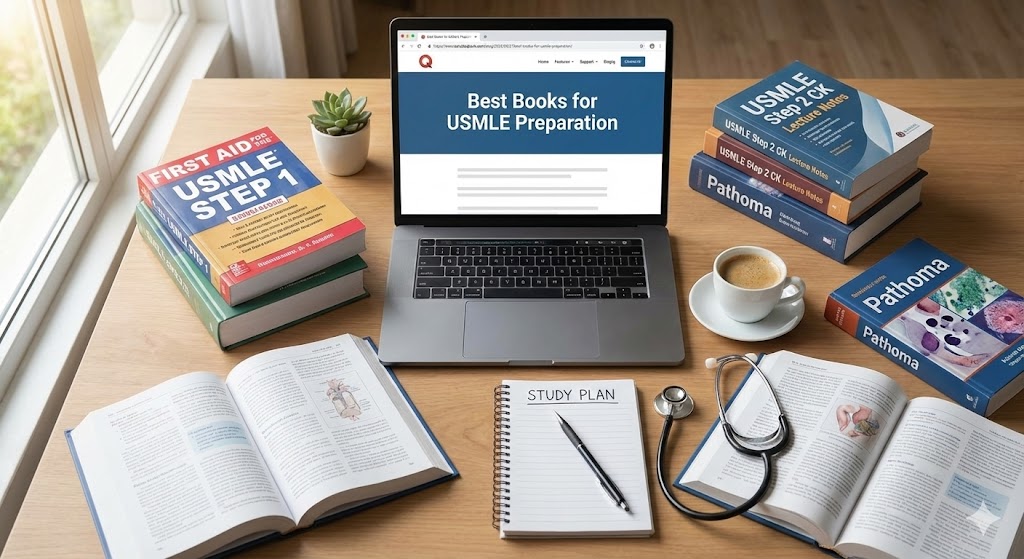
  • First Aid for the USMLE Step 1 – the cornerstone for high-yield review
  • Pathoma – excellent for concise pathology explanations
  • SketchyMedical – effective visual mnemonics for microbiology and pharmacology

Consistency with a limited number of quality resources is far more effective than jumping between multiple platforms.

Tip 3: Master Your Question Bank

A high-quality question bank is one of the most powerful tools for Step 1 preparation.

CanadaQBank is a trusted QBank offering:

  • 3,000+ challenging, exam-style questions
  • Detailed explanations for every answer
  • Timed and untimed modes
  • Custom tests by system or mixed subjects
  • An MCQ interface that mirrors the real exam, including normal lab values

How to Use CanadaQBank Effectively:

  • Start early, even alongside coursework
  • Complete questions system by system before switching to mixed blocks
  • Review every explanation, not just incorrect answers
  • Aim to complete the QBank at least once
  • Use a second pass to reinforce weak areas

Tip 4: Practice Active Learning Techniques

Passive reading alone is not enough for Step 1 success. Active learning forces you to recall, apply, and integrate information, which is exactly what the exam tests.

Effective active learning methods include:

  • Practice questions (QBanks)
  • Self-quizzing
  • Rapid review of recently learned topics
  • The teach-back method (explaining concepts aloud to someone—or yourself)

Active learning significantly improves retention and prepares you for complex, integrated questions.

Tip 5: Take Full-Length Simulated Exams

Full-length practice exams are essential for building stamina, pacing, and mental endurance. Step 1 is an intense, multi-hour exam, and fatigue can impact performance if you are unprepared.

Recommendations:

  • Take 2–3 full-length simulated exams during your dedicated study period
  • Space them throughout your schedule
  • Complete one exam at least one week before test day
  • Use results to identify weak areas and adjust your study plan

Tip 6: Review Weak Areas Consistently

Every student has strengths and weaknesses. The key is identifying weak areas early and addressing them consistently.

To do this:

  • Track performance in your question bank
  • Identify recurring mistakes
  • Schedule weekly reviews for weaker subjects

Targeted review leads to the greatest score improvements.

Tip 7: Use Visual Learning Aids

Visual aids make complex topics easier to understand and remember. Diagrams, flashcards, videos, and mnemonics are especially useful for:

  • Anatomy
  • Pharmacology
  • Biochemistry

Visual learning enhances long-term retention and helps you recall critical details under exam pressure.

Tip 8: Focus on Progress, Not Perfection

Setbacks are inevitable, even with the most detailed study plan. What matters is consistent progress, not perfection.

Small daily improvements compound over time. Track your progress regularly, adjust when needed, and keep moving forward—even on difficult days.

Tip 9: Take Care of Your Mental and Physical Health

Burnout and chronic stress negatively impact memory, focus, and performance. Taking care of your health is not optional—it’s essential.

Self-Care Essentials:

  • Sleep: 7–8 hours per night for memory consolidation
  • Exercise: Regular activity improves focus and reduces stress
  • Breaks: Use techniques like Pomodoro to maintain productivity
  • Nutrition: Eat balanced meals to sustain energy
  • Stress management: Meditation, deep breathing, or mindfulness

Tip 10: Stay Consistent and Avoid Cramming

Step 1 preparation is a long-term process. Cramming in the final weeks leads to stress and poor retention.

Stay consistent by:

  • Studying daily, even if briefly
  • Reviewing material regularly
  • Setting realistic daily goals
  • Using accountability partners if needed

Consistency builds durable knowledge and confidence—cramming does not.

Conclusion

Conquering the USMLE Step 1 requires early planning, disciplined consistency, smart resource selection, and self-care. By applying these 10 strategies and using trusted tools like CanadaQBank, you can build a strong foundation that sets you up for success on Step 1 and beyond.

Preparation is not about doing more—it’s about doing the right things consistently.

Comprehensive Guide to the Best Books for PLAB Preparation

Comprehensive Guide to Best Books for PLAB Preparation

The PLAB (Professional and Linguistics Assessment Board) exams will not only test your theoretical knowledge but also your ability to make informed decisions, especially in emergency situations. There are many resources available, but books remain a trusted way to engage with raw knowledge—specifically, the right books. In this article, we’ll walk you through the most important study materials you will need for the PLAB exam. These materials cover everything from clinical medicine and specialties to exam practice and OSCE skills.

Books for Effective PLAB Preparation

If you want to make the most of your study preparations for the PLAB exam, here is a comprehensive list of books to consult.

Oxford Handbook of Clinical Medicine (OHCM)

This widely used medical textbook has received positive reviews from teachers, students, and educators worldwide. It is often referred to as the “holy book” of clinical medicine. The content is presented in a concise and easy-to-read format, with clear headings and bullet points. Its 600+ pages cover clinical presentations and symptoms, diseases and disorders, diagnostics, conversion charts, and much more. The portable size of this book makes it easy to use in clinical settings and for students to revise before exams. Overall, the OHCM is a valuable resource for both PLAB 1 and 2 candidates.

Get Through PLAB Part 1

Get Through PLAB Part 1 has helped thousands of medical graduates in the UK. This book contains about 500 practice questions that align with the PLAB 1 standard. These questions are organized by topic and difficulty level, with comprehensive answers that guide you to the specific themes and topics you need to revisit. Additionally, the book includes a mock exam paper that you can use to practice under timed conditions. It also features an index for easy reference; for example, if you want questions related to hypertension, you can look up “hypertension” in the index to find the exact page numbers that cover this topic. By covering the entire PLAB 1 syllabus, it remains one of the most comprehensive study materials for this exam.

PLAB 2 Objective Structured Clinical Examination (OSCE) Manual

As the name implies, this is more than just a study book—it’s a manual for anyone preparing for the Practical Assessment (OSCE) exam. This examination tests clinical skills and patient interaction, so this book explains the exam format and provides realistic clinical scenarios. The authors also highlight common mistakes made by PLAB 2 candidates and how to avoid them. You will find this book not only academically useful but also very insightful.

Oxford Handbook of Clinical Specialties

Like the OHCM, this book is rich in detail and covers a wide range of clinical topics. It encompasses over 30 specialties, including cardiology, nephrology, neurology, surgery, psychiatry, pediatrics, respiratory medicine, and more. Authored by experts in each field, this manual conveys complex ideas in the simplest way possible. You will find useful flowcharts and diagrams to help you understand concepts better, especially if you are a visual learner. This book is valuable not only for PLAB candidates but also for junior doctors and healthcare professionals seeking to further their knowledge.

PLAB: 1700 Multiple Choice Questions

This study material is one of the most efficient resources for the PLAB exam, especially if you learn better with MCQs. It contains approximately 1,700 multiple-choice questions designed to test your critical thinking and application of concepts. These questions are divided into three sections: Basic Sciences, Clinical Sciences, and Clinical Practice, and are presented in a format similar to the actual PLAB exam. As you practice, you can compare your answers with the explanations provided in the book. With this resource, you can rest assured that the format of your PLAB exam won’t take you by surprise.

Oxford Handbook of Accident and Emergency Medicine

This book is an invaluable asset for those preparing for PLAB 2. The Oxford Handbook of Accident and Emergency Medicine serves as a trusted guide for managing acute medical emergencies. It covers a wide range of emergency topics that are typically tested in PLAB 2. Additionally, it contains practical advice on the assessment, diagnosis, and management of acute conditions, aligning well with the exam’s focus. Its portable design makes it useful for healthcare professionals working in fast-paced Accident and Emergency environments.

PLAB: 1000 Extended Matching Questions

Self-assessment is important for the PLAB exam, and this material is an excellent choice. It contains 1,000 EMQs covering various specialties, most of which test your ability to match a clinical scenario with the appropriate answer. Like the 1,700 MCQs, it is divided into three main sections covering topics such as surgery, obstetrics, pediatrics, and gynecology. The goal of this book is to enhance your critical thinking and decision-making skills, which closely mirrors how the actual PLAB exam will assess you. Regular practice with this material will help you identify gaps in your knowledge and areas needing improvement.

Conclusion

There you have it—the best study books to help you tackle the PLAB exams. However, keep in mind that not all of these books will meet all your academic needs. This guide allows you to choose the ones that best suit you and your preferred study style.

These books should supplement a more comprehensive study approach. We advise you to consult other valuable resources like virtual courses/classes and question banks. With CanadaQBank, you have access to hundreds of questions across various topics. Feel free to explore the other resources available to help you. And remember to stay focused—you’ll need it. Good luck on your PLAB journey!

MCCQE Part 1: How to Practice Questions?

MCCQE Part 1: How to Practice Questions?

The MCCQE Part 1 exam can be daunting, but a structured and focused approach to practicing questions can make all the difference in your preparation. Before you can effectively plan or prepare for the exam, you must first understand its format.

Exam Format

The MCCQE Part 1 consists of two parts: multiple-choice questions (MCQs) and Clinical Decision-Making (CDM) scenarios. The MCQs contain 210 questions that test your broad medical knowledge across various disciplines such as internal medicine, pediatrics, surgery, psychiatry, and obstetrics throughout the 4-hour exam. The CDM portion challenges candidates to apply clinical reasoning to real-world scenarios, evaluating their ability to make sound decisions in patient care.

High-Quality Question Bank

Once familiar with the exam’s structure, using high-quality resources like question banks is essential. Question banks such as CanadaQBank and UWorld offer extensive collections of practice questions specifically tailored to the MCCQE Part 1. CanadaQBank, in particular, is updated regularly according to the guidelines provided by the Medical Council of Canada. It offers questions that are very similar to the real exam in terms of difficulty and style. The over 3,000 questions serve not just as an assessment tool but as a learning resource, providing detailed answers and explanations to help you gauge your understanding and guide your revision.

Systematic Review of Each Question

While practicing questions, utilizing a systematic approach is crucial. Whether answered correctly or incorrectly, each question provides an opportunity to solidify your knowledge. First, carefully read the question stem to identify key clinical details. Next, analyze the given options, systematically eliminating the obviously incorrect choices until you arrive at the correct answer through critical thinking. The third and perhaps most important step is to review the detailed explanation for each answer, irrespective of whether you got it correct or not. Don’t just focus on why the correct answer is right—understand why the other options are also wrong. This deep level of engagement with practice questions ensures that your knowledge base grows stronger with each session.

Simulate Exam Conditions

Another important strategy in your question practice is to simulate real exam conditions. You can replicate the MCCQE Part 1 environment by timing yourself, creating blocks of 250 questions, and practicing in a quiet space. This will help you develop time management skills, which are crucial for an exam that tests your knowledge, stamina, and efficiency. Full-length practice exams, such as those provided by CanadaQBank or the MCC’s own self-assessment exams, are excellent tools to measure your readiness.

Practice CDM Scenarios

Practicing CDM scenarios is essential for the Clinical Decision-Making portion of the exam. Unlike MCQs, the CDM section comprises 65 to 75 CDM questions related to 38 cases that will be presented to you. These questions require short or open-ended answers and often involve multiple decision-making steps. Familiarize yourself with diagnosing common conditions, identifying significant clinical thresholds, selecting appropriate tests, and determining the correct management strategies, as these skills will help you develop the problem-solving abilities necessary to succeed. This exam section emphasizes practical clinical knowledge, so it’s important to stay up-to-date on current guidelines and best practices in patient care.

Focus on High-Yield Topics

The Part 1 exam covers a vast range of topics, so it is highly recommended that you focus on high-yield subjects. Prioritize frequently tested areas that maximize your efficiency; topics such as cardiovascular diseases, respiratory disorders, infectious diseases, and endocrinology repeatedly appear in questions and should receive extra attention during your study sessions. Board review resources like Toronto Notes can provide a comprehensive summary of these high-yield topics and help you strengthen your foundation before diving into practice questions.

Strengthen Your Foundational Knowledge

Having a solid knowledge foundation is important, as the MCCQE Part 1 tests for the core principles in medicine. Revisiting areas like physiology, pathology, pharmacology, and biochemistry is essential. For these subjects, using visual aids such as diagrams, radiographs, charts, and mnemonics will help reinforce complex concepts. These tools enhance retention and improve your ability to recall information under exam pressure.

Practice Time Management

An often-overlooked aspect of preparation is time management during the exam. The MCCQE Part 1 is a timed exam, with the MCQ portion typically lasting a maximum of 4 hours, while the CDM lasts for 3.5 hours. For the MCQs, you’re advised to spend about 1 minute per question, while you may need around 5 minutes per question for the CDM. This time crunch can put you under pressure and lead to poor decision-making if you haven’t practiced pacing yourself. A good rule of thumb is to allocate about one minute per MCQ, but you may need to spend more time analyzing the clinical scenario before responding to CDM cases. Some cases have more questions than others and may require more or less time than the average. Practicing this skill during your study sessions will prevent panic and ensure you can complete the exam within the allotted time.

Regularly Review Your Knowledge

In addition to content knowledge, it’s crucial to assess your performance regularly. After each practice session, review your answers and identify any recurring mistakes or weak areas. Tracking your progress through question banks helps spot trends in your performance, such as difficulty with certain subjects or question formats. Once you’ve identified your weaknesses, spend extra time reviewing those topics, using additional resources, or focusing on targeted practice questions to reinforce your understanding.

Don’t Be an Island

Something else to remember when practicing is that you shouldn’t rely exclusively on solitary study. Discussing challenging questions or difficult concepts with peers who are also preparing for the exam can deepen your understanding. Study groups provide an opportunity to explain concepts to others, which is one of the best ways to reinforce knowledge. You may also learn new perspectives or problem-solving strategies from your peers, particularly for the CDM portion of the exam, where clinical reasoning is critical.

Stay Updated on Canadian Clinical Guidelines

You must stay up-to-date with the latest Canadian clinical guidelines and test values. Many clinical questions, particularly in the CDM portion, require you to answer based on best practices and current medical guidelines. Having outdated information will negatively affect your performance and could be catastrophic to your results. Familiarizing yourself with resources like the Canadian Task Force on Preventive Health Care or Choosing Wisely Canada will ensure that your clinical decision-making aligns with the standards expected on the exam.

Maintain Consistency

Consistency is the final key to success. The MCCQE Part 1 rewards consistent, daily effort. Cramming in the final weeks before the exam is unlikely to be effective, given the breadth of material you need to cover and understand. You must develop a steady routine where you practice questions, review weak areas, and test your knowledge through self-assessments over several months. This approach will improve your retention of information and reduce anxiety as exam day approaches, as you will be standing on a solid foundation of knowledge and skills.

Do Not Neglect Your Health

While it is necessary to dedicate enough time to your review and practice, you should not fall into the trap of neglecting your health and well-being during your study. If not managed properly, the stress of studying for such a significant exam can lead to burnout. Try to incorporate regular physical activity and mental breaks to prevent fatigue, maintain a healthy sleep schedule, and take time out to do things you enjoy. Remember, your brain thrives when you take care of your mental and physical health.

In conclusion, preparing for the MCCQE Part 1 through practice questions requires understanding the exam’s format, using a high-quality question bank, and employing a systematic approach to question review that will build your knowledge and test-taking skills. Simulating exam conditions, focusing on high-yield topics, and practicing clinical decision-making will further hone your skills. Consistently assessing your progress and refining your strategy where it falls short will ensure you are well-prepared to tackle the MCCQE Part 1 confidently. However, you must not forget to maintain a healthy balance between studying and self-care, as your health is your wealth.

How to Study for USMLE Step 3

How to Study for USMLE Step 3

The USMLE Step 3 is the final exam you must conquer in your battle to become licensed to practice medicine in the United States. The exam tests your clinical knowledge and skills and how well you can apply them in an ambulatory setting. Step 3 is rumored to be hard to pass as it is spread out over two days and consists of over 400 multiple-choice questions and 13 case simulations designed to assess if you are ready for the unsupervised practice of medicine in the United States. It seeks to test how well you understand the biomedical and clinical sciences needed to safely, ethically, and efficiently dispense treatment to U.S. citizens.

For many U.S.-trained physicians, Step 3 comes up during residency, a tumultuous period where you have to juggle a lot of duties and responsibilities while getting what feels like the barest minimum hours of sleep. Others may take it before applying for a residency program, as it can boost your prestige and make you more appealing to hospitals. Your choice will affect how you design and organize your study schedule; we’ll discuss this later.

Before we discuss the steps to take in your journey to master the necessary knowledge and techniques required by the medical board, we should first explain the format, nature, and statistics surrounding the Step 3 exam.

Understanding the USMLE Step 3 Exam

The USMLE Step 3 exam is a two-day event organized by the USMLE test committee to thoroughly assess your ability to identify, treat, and manage patients dealing with illnesses common in the United States. The committee gathers data from hospitals nationwide to design questions that reflect actual case scenarios physicians can and will encounter throughout their practice.

Day 1 of the exam focuses on the foundational knowledge and medical principles necessary for independent clinical practice. A seven-hour exam consisting of approximately 232 multiple-choice questions (MCQs) checks your understanding of basic science concepts, medical knowledge, and diagnostic reasoning. You will be tested on your knowledge of the epidemiology and pathophysiology of diseases, pharmacology, and basic courses like anatomy, pathology, and physiology.

Day 2 focuses on clinical decision-making and patient management over a longer period. It assesses your ability to manage patients in a continuum, either as a new doctor-patient interaction or assuming you are familiar with the patient’s history and previous conditions. Day 2 lasts about nine hours and is divided into two parts: the first in the morning includes 180 MCQs, followed by a 45-minute break. The second part, which occurs after the break, involves 13 computer-based case simulations (CCS), which give you a virtual patient requiring ongoing care. You must order tests, prescribe treatments, and manage patient progress based on real-time feedback from the simulation, which responds to your actions like a real patient.

Step 3 is scored on a three-digit scale, and the minimum pass score ranges between 198 and 200. Your final score is obtained by combining your MCQ and CCS performance. As of 2023, the exam had a pass rate of 97% for first-time test takers from U.S. and Canadian medical schools. Those retaking the exam had a pass rate of 64% – 76%, showing that experience is not always a guarantee. Medicine, Surgery, Pediatrics, Psychiatry, Obstetrics and Gynecology, Preventive Medicine, and Public Health are some major categories tested in the Step 3 exam.

How Long Should You Study

There is no official timeframe for how long you should prepare for Step 3; it depends on you, your circumstances, and how quickly you can re-assimilate your academic knowledge. As noted before, many American-trained doctors choose to take this test during their early residency, while some prefer to take it earlier in their journey as medical students. Some candidates take it before residency to free up time during the more demanding years that follow. Most agree that three to four months is enough to cover the tested topics. Some factors that can affect your decision include how much free time you have to dedicate to studying, how knowledgeable you are at patient management, your prior performance on Steps 1 and 2, how long ago you left school, and how much residual knowledge you have. Finally, you must consider your study habits and how long it takes you to assimilate information.

How to Study for USMLE Step 3

Preparing for the Step 3 exam can be time-consuming and stressful, especially if not properly planned. Below are some techniques to streamline the process and hopefully reduce stress and panic.

Narrow Your Resources

There are countless resources available online that claim to contain the secret to passing. The key to using resources is to pick a few, and we recommend no more than five, which thoroughly explain and review the high-yield topics most likely to be tested. First Aid for the USMLE Step 3 is great for a detailed summary and overview of the exam. CanadaQBank is a highly recommended question bank that exhaustively covers both aspects of the Step 3 exam. It provides detailed answers and explanations for each question, allows the option of practicing under simulated testing conditions, and is continuously updated. Their CCS Qbank offers all that and goes even further by providing a clinical encounter and post-encounter probe, as well as relevant questions you should ask during history taking.

Identify Your Strengths and Weaknesses

Before you begin studying, you should take a timed and unbiased simulation of the full exam to identify the areas where you struggle. The test results will show you the areas that need improvement and those where you can focus less.

Create a Study Schedule

A good study schedule should consider your free time, responsibilities, strengths and weaknesses, and health. It should not be too cluttered but rather spaced out to give you time to do justice to the individual topics and not neglect your responsibilities or health. Areas where you are weak or have a higher yield should be allocated more time when studying, while your strengths should require less, as you understand them better. The schedule should allow for regular testing and a revision period toward the start of the exam.

Practice, Practice, Practice

It cannot be stressed enough how important it is for you to practice regularly for the exam. The most obvious benefit will be improving your stamina, which matters a lot given that the exam lasts for two days and several hours each day. Regular practice will also help you identify simple mistakes and allow you to compensate for them. Furthermore, regular practice with a good Qbank like CanadaQBank will boost your confidence and reinforce your knowledge, even if you haven’t revised it.

Progress, Not Perfection: You Can’t Know It All

Finally, you should remember that it is impossible to be 100% knowledgeable about any subject. The aim should be to be better than you were yesterday, so that when exam day comes, you will have built a solid foundation to help you puzzle out answers to questions you don’t know. Another perk of having this mindset is that you will have greater control over your emotions and won’t have a breakdown if you fail to review all the topics you set out for yourself. Anxiety, stress, and worry will do more damage to you during the exam than any perceived lack of preparedness.

Who can apply for the PEBC exam in Canada?

Who can apply for the PEBC exam in Canada?

The Pharmacy Examining Board of Canada (PEBC) is the national certification body responsible for assessing and certifying the qualifications of pharmacists and pharmacy technicians in Canada. The Board was created in 1963 and has since been in charge of ensuring that pharmacists who seek to work for and serve Canadians are well-trained and knowledgeable of the customs, regulations, ethics, and standards required to practice safely and effectively in Canada.

The PEBC exam is the gateway for Canadian and internationally trained pharmacists to become licensed and practice in Canada. The exam has two primary components for pharmacists: the Evaluating and Qualifying examinations. Candidates trained in Canada will only have to write the qualifying exam. In contrast, internationally trained pharmacists must write the evaluating exam before they can write the qualifying exam.

The PEBC evaluating exam is a 4.25-hour computer-based exam that assesses general pharmaceutical, biomedical, and behavioral knowledge to ensure that candidates are on par with Canadian educational standards. The qualifying exam has two parts: first is the single day, computer-based MCQ, and Part 2 is an objective structured clinical examination (OSCE) that simulates common and emergency practical situations with a series of interactive and non-interactive stations. Part 2 exam must be conducted in person as examiners seek to find out how well you can gather, process, and understand information about your patient and how you can solve their problem. Your ability to communicate effectively with your patient, caregiver, or other healthcare professionals will also be watched and scored.

Eligibility criteria

Before you can apply for the PEBC exam, there are a few pre-requistes you have to complete. The first and perhaps most obvious is that you have to be a graduate of a pharmacy program from an institution recognized by the board. Next, you must show you have a solid grasp of either English or French, depending on what province you are applying to and the language of the exam.

Most places require that you have completed a minimum amount of internship or practical training to ensure you are sound in more than just theory. Finally, you must be in the good books of the regulatory bodies, meaning you must have no outstanding case with them and have committed no crime. Fulfilling these prerequisites will allow you to begin the application process.

How to apply

The first step to becoming licensed in Canada (except in Quebec) is registering with the Pharmacists’ Gateway Canada for a fee of $380 to create a profile and obtain a NAPRA ID number. The ID number is necessary because it allows you to apply for document evaluation with the PEBC. The created profile will serve as a document repository and a way to track your application progress.

Next, you have to register with the PEBC to begin the Document evaluation, which checks if your qualifications are legitimate. You must complete your profile and then pay the application fee of $705 or $250 for US graduates before you mail or courier a printed and filled application form, documents to prove your identity and support that you graduated from an acceptable program, and proof of licensure.

Graduates from U.S institutions need only submit their documents for evaluation, while candidates from other international schools will have to write and pass the PEBC Evaluating exam before they can apply for the Qualifying exam. The Qualifying exam is the final step to acquiring the PEBC Certificate of Qualification, and it tests how competent you are in safely and efficiently working in an ‘entry-level’ position.

The exam results will be posted on your profile with either pass or fail. Those who do not pass are allowed up to four retrials, but the candidates must petition the PEBC to be allowed a fourth attempt after undergoing remediation.

Who can apply

The PEBC is open to everyone who meets the abovementioned requirements and can pay the various fees. Canadian citizens and permanent residents who meet the educational and language proficiency requirements can apply for the exam. International graduates who completed a pharmacy program recognized by the PEBC, pass the language requirements, and have submitted validated credentials are also eligible to apply. Finally, pharmacists already working in other countries may be allowed to apply for the exam. Still, they will be required to submit the necessary documents that prove their education, experience, and license are up to Canadian standards.

Exam Difficulty

The PEBC qualifying exam is known for being difficult, especially for internationally trained pharmacists. The exam not only tests theoretical knowledge but also practical and clinical decision-making skills in real-world pharmacy scenarios. The OSCE portion, in particular, can be difficult as it simulates clinical tasks that require quick and accurate judgment, communication, and problem-solving. Previous results have shown that candidates trained in Canadian schools have an 86.5% pass rate for Part 1 and a pass rate of 93.7% for the OSCE. However, international first-time test takers had a pass rate of 43.3% for Part 1 and 59.8% for Part 2. The lower pass rate for international applicants has mainly been attributed to a lack of familiarity with Canadian practice standards and ethics.

To help combat that, there are bridging programs offered by recognized Canadian institutions developed for international pharmacy graduates to help fill in the gaps in their knowledge. These programs typically focus on Canadian pharmacy practice, legal and ethical aspects, clinical skills, and Canadian culture and communications. Alberta, British Columbia, Ontario and Quebec have made it mandatory that internationally trained applicants enroll in a bridging program before gaining licensure.

However, even without the bridging programs, candidates can still perform excellently in the exams if they prepare with the right resources. CanadaQBank is one such resource that can make studying for the exam easier, especially for IPGs who may be unaware of Canadian standards. CanadaQBank is a highly regarded question bank with over 1,000 challenging MCQs, detailed explanations, and similarities to the actual exam format. It allows you to practice for the exam in a timed or untimed mode, generates customized tests from single or multiple subjects, and has an upgraded MCQ interface with normal lab values that accurately simulate the exam.

8 Tips on How to Use Anki USMLE Flashcards

8 Tips on How to Use Anki USMLE Flashcards

To take the USMLE exam, you need to be strategic in your study approach to make sure that you retain the most important information. There are a lot of materials to cover, and it’s always smart to maximize study time and minimize information overload. The Anki USMLE Flashcards are a great way to study smart and efficiently.

In this article, we discuss Anki flashcards, how to use them effectively, and how they can help you streamline and optimize your studying.

What is Anki?

Anki flashcards are digital tools designed to help people, especially students, memorize and retain information. With this software program, you can create digital flashcards and use an algorithm to modify the timing of when you review each card.

How does the Anki Flashcard work?

On these flashcards, you could have a question or term on one side and its answer or explanation on the other. Using an algorithm, Anki predicts when you are most likely to forget the information on a card that you just viewed. So, it makes it easier for you. It simply presents the cards at intervals to help solidify the information in your long-term memory. This software is readily available for use on any smart device and will work great for USMLE candidates.

What’s the Best Way To Use Anki Flashcards?

When it comes to the USMLE exams, whether USMLE Step 1 or Step 2, it’s not just about what you study; it’s also about how you study. Here are the most effective ways to use Anki USMLE cards:

1. Create Your Custom Flashcards

When it comes to personalized learning, it’s smarter to make your own Anki cards. As you create the card, you actually engage the information rather than passively reading or listening to pre-made cards that the software has generated for you. You will find that this really helps you focus on topics in the USMLE syllabus that are most challenging and important to you. In the long run, what you have created yourself will linger longer in your memory.

2. Start Small

We hate to break it to you, but bigger isn’t always better. Starting your Anki journey with a relatively small number of cards prevents you from feeling overwhelmed or overloaded with information. For some people, the effect is that the motivation to study wanes almost immediately. Meanwhile, you can make things easier for yourself by determining what you’re comfortable with first; then, when you build a consistent study habit, you would be motivated enough to add more cards to your routine deck.

3. Dedicate Your Time

When you think about it, the most important key in using Anki flashcards is consistency. If you want to get anything out of Anki, you must prioritize it as much as your classes and in-depth study time. Start by deciding on a realistic number of cards or decks to review each day. Likewise, allocate a specific amount of time each day to use the cards. As your time affords you, practice in the morning when your brain is fresh and relaxed, later in the day during your free time, or at specific time intervals. The software is built such that if you don’t use it for a few weeks, there could be hundreds, if not thousands, of review cards waiting for you when you return. Trust us, that would be overwhelming.

4. Incorporate Multimedia

Even as medical students, learning does not have to be boring. Thankfully, the Anki software has ways to make things more exciting. The “Multimedia Support” feature allows users to add audio, video, and images to the cards they have created. While images will help clarify technical concepts, audio and videos can provide additional context to the information you’re aiming to learn. Learning this way is less boring for people who associate information with visual and auditory cues.

5. Test Yourself

To be honest, flashcards can be a little too convenient to use. It’s really easy to flip cards back and forth without challenging yourself in any way. However, you can change that with the “Cover” feature on Anki, which enables you to hide the answer on the back of the card. Then, test yourself by trying to recall the answer without turning the card. The more often you do this, the easier it is to retrieve information from your memory.

6. Try the Feynman Technique

This learning and teaching method by Richard Feynman is a smart and efficient method to identify gaps in what you have studied. Start by choosing a topic from the USMLE syllabus that you want to look at using your cards. When you have studied them enough, attempt to teach what you’ve learned to someone else, preferably somebody who knows nothing about medicine.

As you relay everything you have learned, be careful enough to identify the parts of your explanation that may be unclear. Those are the exact areas that you should make into new decks to practice over time. Continue to refine your understanding of these areas until you’re sure you can teach them in a more comprehensive manner.

7. Link Anki to All Your Devices

The great thing about this software is that you can access it anytime, anywhere, as long as you have a smart device. Like many other software, Anki allows you to link your devices to just one account and synchronize your decks. This just means that you can study your cards anywhere, any time, with whatever device you’re with at that moment. So, even if you lose a device, you’ll find your cards on the other and pick up right where you left off.

8. Retain All Decks

When you finish a deck, it can be exhilarating, but don’t be in a hurry to delete it. Nobody tosses out books when they’ve finished reading them, and the same should apply to your USMLE flashcards. Keep them even if you have mastered and memorized the subject; after a few weeks, you will have created your own personalized USMLE flashcards library. Furthermore, if you ever need to recollect a previously learned idea, the cards you saved will be easily available.

Conclusion

The most important thing about using flashcards is that it must never replace actual studying. This includes studying with books, question banks, and even virtual classes. Flashcards are great, but they were not designed to be used in isolation or as a replacement for thorough studying. Additionally, note that these cards may not suffice in areas such as Physiology and Pharmacodynamics because they contain complex ideas that a flashcard may not convey accurately.

As your USMLE exam approaches, question banks and other study resources are an effective supplement to your flashcards. CanadaQBank has hundreds of questions and useful materials spanning every necessary topic.

Best Study Books for the Step 2 CK 2026

Best Study Books for the Step 2 CK 2024

After the USMLE Step 1 exam, it’s time to start preparing for the next step, and the first thing to do is get the right resources. The right study materials will set you up for success in your USMLE Step 2 CK examination. There are so many books specifically written for students preparing for Step 2, and selecting the ones that would work best for you can be overwhelming. You want to buy books that provide comprehensive information efficiently, use images and mnemonics, and have a great question bank. This article contains a list of carefully curated books and resources to help you prepare for your USMLE Step 2 CK 2026.

1. White Coat Companion

Boards and Beyond: White Coat Companion is a popular and efficient study material that covers every topic on the Step 2 exam syllabus, from gynecology to pediatrics to obstetrics and many other core areas. It is a great book to start with for your USMLE Step 2 studies 2026. The book is well-organized and thoughtfully put together, carefully considering the most frequently tested topics. White Coat Companion also contains a good number of tables and illustrations that will help visualize concepts you may find difficult.

While it may be a little overwhelming as it includes study resources for all clinical NBME exams and Step 3, it provides all the essential information to succeed in the Step 2 CK exam.

2. Master the Boards

In Master the Boards, you will find all the tables, algorithms, and images you’re likely to encounter in the USMLE Step 2 CK 2026 exam. With over 50 new tables and algorithms for management and diagnosis, 50 full-color diagnostic diagrams, and every topic presented as a series of questions, this book lives up to its title. It also comes with a question bank and a podcast for students who prefer audio aids.

However, it isn’t the most detailed resource and should be supplemented with other books for comprehensive coverage.

3. Kaplan Lecture Notes

Kaplan Lecture Notes is one of the best books to consult while preparing for Step 2 CK 2026. It is updated regularly and covers all topics in great detail across five volumes, focusing on areas like Hematology, Cardiology, Preventative Medicine, and Infectious Disease. Its 1,300 pages contain over 450 high-quality images and tables. The outline format helps candidates study step by step at their own pace.

When paired with other resources, it significantly aids preparation for the Step 2 CK exam 2026.

4. Step Up to USMLE Step 2 CK Fourth Edition

Unlike White Coat Companion, Step Up to USMLE Step 2 CK focuses precisely on the exam scope. Its sections span Neurology, Dermatology, Psychiatric Disorders, Oncology, Emergency Medicine, Pediatrics, and more, with mnemonics, illustrations, and color-coded sections.

The “Quick Hit” section highlights topics most likely to appear on the exam and contains up to 300 USMLE Step 2-standard practice questions. The fourth edition is an excellent additional study resource for focused preparation.

5. The USMLE Step 2 Secrets Fourth Edition

USMLE Step 2 Secrets is a compact, concise book using bulleted lists, algorithms, and illustrations for engagement and retention. The latest edition features a four-color section displaying pathology and clinical images. However, it may lack the most up-to-date content and overlaps with Step 1 and Step 2 resources.

6. First Aid for the USMLE Step 2

First Aid for USMLE Step 2 contains quick facts and bullet points covering patient safety, quality improvement, and other key areas. Its concise format is excellent for last-minute review, with mnemonics and visual aids to reinforce learning.

While very useful, it should not be the sole resource, as it focuses more on Internal Medicine than Pediatrics or Obstetrics & Gynecology.

Conclusion

All the books referenced above will be very helpful for USMLE Step 2 CK 2026 preparation. Most candidates benefit from combining multiple resources for maximum coverage. Revising previous Step 1 notes is also recommended, as they provide a solid foundation for Step 2 CK.

Don’t forget to practice and test yourself with real exam simulations. Visit CanadaQBank to access relevant study materials, practice exams, and question banks. Good luck on your Step 2 CK 2026 exam!

Importance of Self-Assessment in MCCQE1 Preparation

Importance-of-Self-Assessment-in-MCCQE1-Preparation

It is no longer news that the MCCQE1 is an inevitable step in the journey to becoming a licensed physician in Canada. The stakes are high, and there is no such thing as over-preparation. You may already know all the tips to acing your MCCQE 1 exam but self assessment is equally important.

When you self assess, you examine your strengths as well as your performance, based on the criteria of the exam. Think of it as a parameter that will help you measure where you’re at and what you want to achieve. Thereafter, you can take the appropriate steps and remedial measures that match your pace or study technique.

This article will give you a clear picture of the process of self assessment and why you need it before your MCCQE1 exam.

What Should I Expect in the Exam?

In the process of preparing for this test, knowing what’s ahead of you will solve half of the problem. When you understand the structure of the exam you can identify your own gaps. Here is what to expect in your MCCQE Part 1 test.

It is a 1-day computer-based exam that qualifies candidates to enter supervised practice. You can take the exam in an available prometric test center or via remote proctoring on a first come, first served basis. It’s a 7 hour exam divided into morning and afternoon sessions. The morning session lasts about 4 hours to answer 210 multiple questions and up to three and a half hours in the afternoon session for the clinical decision making component.

The CDM component of the MCCQE1 test includes 38 case scenarios, each with some questions attached. This case description assesses your decision-making ability in various situations. You must provide your choice in areas such as diagnosis, prescription, gathering information and so on, as you would if given an actual patient the overall number of questions ranges from 60 to 70 across all 38 cases and the structure of the questions will require that you provide short write-in answers.

Why Do I Need Self-assessment Before this Test?

Now that you understand what you’re up against, it is equally important that you understand why you must evaluate yourself before you take the MCCQE1 test.

1. Less Anxiety: Exam anxiety is a normal feeling, especially with high stake exams such as this one, but self-assessment can help reduce that anxiety because you know what to expect and you’re sure that you have worked on your weaknesses. You can now shift focus from “I hope I passed” to “I’ve worked hard to improve”. This attitude and approach over time reduces anxiety, improves your performance, helps you think more clearly and helps you make better decisions under pressure.

2. Time Management: When you take a self assessed test, it helps you realize how much time you will potentially spend on the exam. The more you practice, the better you get at time allocation and management. There are self-assessment websites such as CanadaQbank where you can set the level of difficulty you want your questions to be, so as you continue to practice over and over you can progress to increasing levels of difficulty with shorter time limits. In this way, on the examination day, you could finish all of your questions with time to spare.

3. Topic Revision: Self-evaluation before a test works best when you revise each topic as you study. You don’t have to wait until you’re done with all of your reading before testing your knowledge. CanadaQbank offers this feature which helps streamline your revision and studying, and helps you know what topics to pay closer attention to. You could also take tests repeatedly so as to realize and work on specific areas that come up as weaknesses.

4. Confidence in your Preparedness: Being prepared for an exam can make you much more confident. It is one thing to self-assess, it is another to self assess ahead of time. This affords you a substantial amount of time to prepare effectively and turn your weaknesses into strengths.

Make sure to start your preparations and revisions early enough so you’re not overwhelmed when the exams are close. Crash reading is an undeniable contributor to the development of unhealthy reading habits therefore you’re advised to start your reading as early as possible so you can develop healthy study patterns.

All of this strengthens your assurance and yourself as you make all the necessary preparations you need to ace the exams.

Make sure to start your preparations and revisions early enough so you’re not overwhelmed when the exams are close. Crash reading is an undeniable contributor to the development of unhealthy reading habits therefore you’re advised to start your reading as early as possible so you can develop healthy study patterns.

All of this strengthens your assurance and yourself as you make all the necessary preparations you need to ace the exams.

How Do I Self-assess?

To take the self-assessment, you need to sign up to a question bank website. An example is Canadaqbank.com, which has all of the features that you will need for your preparations. as mentioned in this article. You can download the mobile app or use the website online. Access to all the features will require a subscription from you which will attract an affordable fee.

Once you have subscribed, you’ll be given login details and you will be able to access all you need. You can streamline your question, then review your tests. Additionally, there are links to demo videos on the app or website, which will help you understand how to navigate the app and the website.

You will also need to go through the MCC’s official website so you’re aware of the recommended books and study materials. The site helps you access resources that will go a long way in guiding your preparations.

Lastly, you can try peer assessment. If you have a couple of friends or colleagues who are also taking the exams, it’s not a bad idea to hang out and evaluate each other’s performance.

Conclusion

As you self-assess, try not to be hard on yourself. When you find your strengths, give yourself a part on the back and leverage on these strengths. If you find weaknesses, give yourself time to process and work through them. As you make all these preparations, try not to see the examination as a hurdle, see it as a bridge that brings you a step closer to your dreams. Don’t forget to explore the many resources on CanadaQbank that can make this journey smoother for you. Good luck!