How to Plan Your USMLE Step 1 Study Routine

How to Plan Your USMLE Step 1 Study Routine

The USMLE Step 1 exam remains one of the most demanding milestones in a medical student’s journey. Although the exam transitioned to a Pass/Fail scoring system, it is still an intensive 8-hour examination that evaluates how effectively you can apply foundational science concepts to clinical scenarios.

Step 1 emphasizes the principles underlying health, disease, and treatment, drawing heavily from disciplines such as anatomy, biochemistry, behavioral sciences, microbiology, pathology, pharmacology, and physiology. Strong Step 1 preparation continues to be essential, not only to pass, but to build the knowledge base needed for USMLE Step 2 CK, where numerical scores matter most.

With so much content to cover, many students struggle to design an effective study plan. The key to success is not copying someone else’s schedule, but creating a routine that fits your learning style, timeline, and responsibilities. This guide walks you through how to plan your USMLE Step 1 study routine effectively in 2026.

How Long Should You Study for USMLE Step 1?

There is no single “perfect” timeline. Most students begin preparation 4–6 months before their exam date, but the ideal start time depends on your baseline knowledge and learning style.

Starting early does not mean studying 7–8 hours every day. That approach is unrealistic for most students, especially those balancing coursework, clinical responsibilities, or personal commitments. Instead, early preparation should focus on consistency, not intensity.

If you have a strong grasp of foundational sciences, you may need less time for content review and can start closer to your exam date. However, regardless of background, dedicated studying should begin at least 4 months before the exam to allow sufficient time for revision, practice, and consolidation.

Think of Step 1 like training for a marathon: preparation should be gradual, strategic, and sustainable.

Steps to Plan Your USMLE Step 1 Study Schedule

1. Building Your Foundation Phase

Every strong Step 1 performance begins with a solid foundation. This phase is about learning how the exam thinks, not chasing high scores.

During the early months:

  • Pair content review with moderate Qbank usage
  • Aim for:
    • 30–60 minutes of focused reading
    • 20–40 practice questions per day
  • Use weekends for:
    • Higher question volume
    • Thorough error review

The goal here is not perfection—it’s building:

  • Question literacy
  • Pattern recognition
  • Awareness of weak areas

Consistency matters more than speed. If you fall behind, use buffer days rather than rushing or skipping topics.

2. Launching Into Dedicated Study

Your dedicated study period typically begins 6–8 weeks before exam day. This is when preparation becomes more intensive and exam-focused.

Start by completing a timed practice block to understand your real pacing. This helps you calculate how many questions you can realistically complete and review per day.

Organize your study by systems (cardiovascular, respiratory, renal, etc.), but avoid isolating them entirely. Instead, use spaced repetition, revisiting systems multiple times across your schedule to strengthen retention.

A typical dedicated study day might include:

  • Morning content review (e.g., First Aid, Sketchy)
  • Qbank blocks of 40–60 questions
  • Deep review of explanations
  • Regular breaks, hydration, and light exercise

Your brain performs best when it’s treated well—burnout helps no one.

3. Practicing Full-Length Exams

Full-length practice exams are non-negotiable. They build stamina, identify weaknesses, and reduce exam-day anxiety.

  • Take your first CanadaQBank full-length exam early in the dedicated phase
  • Use it as a baseline, not a judgment
  • Schedule follow-up mock exams every 2–3 weeks
  • Aim for 2–3 full-length exams total

After each exam:

  • Review mistakes carefully
  • Focus on accuracy in weak areas rather than chasing raw score jumps
  • Adjust your study plan based on trends, not single results

4. Tapering and Final Preparation

In the final two weeks, shift your focus from volume to precision.

  • Reduce question load by about 50%
  • Revisit weak topics and flagged questions
  • Use concise notes and flashcards for reinforcement
  • Keep a few buffer days for last-minute gaps

At this stage, consolidation matters more than cramming.

The day before the exam, choose one:

  • Rest completely, or
  • Do light review only (high-yield notes or flashcards)

Avoid full question blocks. Sleep well, eat familiar foods, and trust your preparation.

Strategy & Mindset Throughout Preparation

A few principles can make your preparation smoother and more effective:

  • Mix difficult and lighter subjects daily to prevent burnout
  • Track progress (accuracy, timing, weak topics) and adjust accordingly
  • Treat Qbank review as the core learning tool—not just right vs. wrong
  • Build endurance gradually; don’t jump straight into long blocks
  • Watch for burnout and use rest days strategically
  • Prioritize mental health with exercise, breaks, and social connection

A calm, focused mind learns faster than an exhausted one.

Final Exam Day Tips

  • Wake up early and eat a balanced, familiar breakfast
  • Pack essentials: ID, snacks, water, earplugs (if allowed)
  • Arrive at the test center early to reduce stress
  • Pace yourself and flag difficult questions instead of dwelling
  • Remember: Step 1 tests application, not memorization

You’ve trained for this moment—trust the process.

After the Exam

Once you submit your exam, step away from studying. Avoid replaying questions in your head. Take time to rest, celebrate, and reset before your next milestone.

You’ve completed a major chapter in your medical journey—well done.

Prepare for USMLE Step 1 with CanadaQBank

Success on Step 1 starts with high-quality practice.

CanadaQBank offers:

  • 3,000+ USMLE-style MCQs
  • Detailed explanations for every question
  • Timed exam simulations
  • Updated content aligned with the latest USMLE blueprint
  • Anytime, anywhere access

Prepare with confidence—CanadaQBank is your partner for USMLE success.

Ultimate Guide to Acing the AMC MCQ CAT in Australia

Ultimate Guide to Acing the AMC MCQ CAT in Australia

For doctors planning to practise medicine in Australia, the Australian Medical Council Multiple Choice Computer Adaptive Test (AMC MCQ CAT) is an unavoidable milestone on the road to licensure. Whether you are a locally trained graduate or an international medical graduate (IMG), passing the AMC CAT is essential—not only to progress in the registration pathway, but also to remain competitive in Australia’s demanding healthcare job market.

Although the AMC CAT has a reputation for being challenging, its difficulty can be significantly reduced with targeted preparation and the right resources. Understanding the exam format, content domains, purpose, and scoring philosophy is key to success.

This guide provides a clear, up-to-date overview of the AMC MCQ CAT and practical strategies to help you pass with confidence.

What Is the AMC MCQ CAT?

The AMC MCQ CAT is the first examination in the Standard Pathway for doctors seeking registration in Australia.

Key Exam Details (2026)

  • 150 single-best-answer MCQs
  • 5 hours (210 minutes)
  • Computer Adaptive Test (CAT)
  • Delivered at Pearson VUE test centres worldwide
  • Assesses knowledge expected of a final-year Australian medical student

The exam evaluates whether you have the clinical knowledge and judgment required for safe and effective medical practice in Australia.

Understanding the Computer Adaptive Format

Unlike traditional fixed exams, the AMC MCQ CAT adapts in real time:

  • Correct answers → subsequent questions become more difficult
  • Incorrect answers → subsequent questions become easier

This adaptive model allows the exam to assess your ability level more precisely. Because of this, raw scores are not shown, and every question matters equally—early mistakes can still be recovered from with consistent performance.

AMC MCQ CAT Content Domains

The AMC blueprint organizes exam content into five major domains:

1. Medical Sciences

Questions test foundational knowledge such as:

  • Pathophysiology
  • Pharmacology
  • Microbiology
  • Biochemistry

Emphasis is placed on applying this knowledge to clinical decision-making, not recalling isolated facts.

2. Clinical Assessment and Diagnosis

This domain focuses on:

  • Differential diagnoses
  • Appropriate investigations
  • Interpretation of results
  • Disease progression and follow-up

Scenarios are framed within Australian clinical practice, reflecting local standards of care.

3. Therapeutics and Management

You may encounter multiple acceptable treatment options—but only one best answer that aligns with:

  • Australian clinical guidelines
  • Patient safety
  • Cost-effective care

4. Legal, Ethics, and Professional Responsibility

These questions assess:

  • Ethical reasoning
  • Consent and confidentiality
  • Professional boundaries
  • Australian medico-legal standards

This section is particularly important for IMGs unfamiliar with Australia’s healthcare framework.

5. Population and Indigenous Health

Australia places strong emphasis on:

  • Public health
  • Preventive medicine
  • Social determinants of health
  • Aboriginal and Torres Strait Islander health

Effective communication and culturally safe care are core themes.

How to Apply for the AMC MCQ CAT

Follow these steps carefully:

  1. Create an AMC Portfolio
    Register at the official AMC website.
  2. Primary Source Verification via EPIC (ECFMG)
    Your medical qualification must be verified before you can sit the exam.
  3. Apply for the AMC MCQ CAT
    Once EPIC verification is complete, you can request authorization.
  4. Schedule Your Exam via Pearson VUE
    Choose your preferred test centre and date.

Results

  • Results are typically released within 3 weeks, usually on a Friday.

Who Should Take the AMC MCQ CAT?

The AMC MCQ CAT is required if:

  • You are an international medical graduate (IMG)
  • You are applying through the Standard Pathway
  • Your medical degree has been verified via EPIC
  • You plan to proceed to the AMC Clinical Exam
  • You aim to apply for provisional registration with AHPRA

Exam Fees (Indicative, 2026)

Fees are subject to periodic review by the AMC, but candidates should budget for:

  • AMC MCQ CAT authorization fee
  • AMC Portfolio setup and qualification verification fees
  • Result verification or reissue fees (if required)
  • Credit card processing surcharge (approximately 1%)

Because fees change, always confirm the latest amounts on the official AMC website before applying.

Recommended Study Resources

Before starting preparation, review the AMC MCQ Examination Specifications booklet, which outlines the exam blueprint and expectations.

High-yield resources include:

  • AMC Handbook of Multiple Choice Questions
  • John Murtagh’s General Practice (Australian clinical reasoning)
  • Oxford Handbook of Clinical Medicine
  • CanadaQBank – for exam-style practice and performance tracking

Tips for Success in the AMC MCQ CAT

  • Practice adaptive-style questions to become comfortable with changing difficulty
  • Focus on clinical reasoning, not rote memorization
  • Learn Australian guidelines, as management often differs from UK/US practice
  • Improve time management to avoid rushing late in the exam
  • Regularly practice 150-question blocks to build stamina

Consistency and familiarity with exam logic are more important than memorizing rare facts.

Final Thoughts

The AMC MCQ CAT is demanding, but it is a fair and predictable exam for candidates who prepare strategically. With the right understanding of Australian clinical standards, structured revision, and high-quality practice questions, passing the exam is entirely achievable.

Your journey toward practising medicine in Australia starts here—prepare smart and stay focused.

Prepare for the AMC MCQ CAT with CanadaQBank

CanadaQBank helps AMC candidates succeed with:

  • High-yield AMC-style MCQs
  • Detailed clinical explanations
  • Timed and exam-simulation modes
  • Performance analytics by subject
  • Continuous updates aligned with AMC standards
  • 24/7 access worldwide

Prepare with confidence. Prepare with CanadaQBank.

Average Doctor Salary in Canada 2026: A Comprehensive Guide

Average Doctor Salary in Canada 2026

If you’re considering a medical career in Canada or are already a practicing physician, understanding the average doctor salary in Canada for 2026 is crucial. Salaries for doctors vary widely based on specialization, experience, location, and employment type. In this blog, we’ll break down the expected earnings for physicians across different fields, provinces, and practice settings while also exploring factors that influence income.

By the end of this guide, you’ll have a clear picture of what doctors can expect to earn in 2026 and how to maximize your earning potential. Plus, if you’re preparing for medical licensing exams, CanadaQBank offers premium question banks and study resources to help you succeed!

Overview of Doctor Salaries in Canada

Doctors in Canada are among the highest-paid professionals, reflecting the extensive education, training, and responsibility required in the field. According to recent projections, the average doctor salary in Canada in 2026 is expected to range between $230,000 and $520,000+ per year, depending on specialization and other factors.

Key Factors Affecting Doctor Salaries:

  1. Specialization – Surgeons and specialists typically earn more than general practitioners.
  2. Experience – Senior doctors with years of practice command higher fees.
  3. Location – Urban vs. rural practice and provincial fee structures impact earnings.
  4. Employment Type – Self-employed physicians often earn more than salaried hospital doctors.
  5. Billing Model – Fee-for-service vs. salary-based roles influence income.

Now, let’s dive into the specifics.

Average Doctor Salary in Canada by Specialty (2026)

1. Family Physicians (General Practitioners)

Family doctors are the backbone of Canada’s healthcare system. In 2026, the average salary for a family physician is projected to be between $230,000 – $320,000 annually. Those in rural or underserved areas may earn higher due to incentives.

2. Medical Specialists

Specialists such as cardiologists, neurologists, and gastroenterologists earn significantly more. Expected salaries in 2026:

  • Cardiologists: $420,000 – $650,000
  • Neurologists: $320,000 – $470,000
  • Gastroenterologists: $370,000 – $520,000

3. Surgeons

Surgeons are among the highest-paid doctors in Canada. Projected 2026 earnings:

  • General Surgeons: $370,000 – $520,000
  • Neurosurgeons: $550,000 – $850,000+
  • Orthopedic Surgeons: $480,000 – $750,000

4. Emergency Medicine Physicians

ER doctors handle critical cases and can expect an average salary of $320,000 – $470,000 in 2026, with variations based on shift differentials and location.

5. Psychiatrists

With increasing demand for mental health services, psychiatrists are projected to earn $270,000 – $420,000 annually.

6. Pediatricians

Pediatricians earn between $210,000 – $360,000, depending on whether they work in private practice or hospitals.

Provincial Breakdown of Doctor Salaries in Canada

Salaries vary by province due to different healthcare budgets and fee schedules. Here’s a comparison for 2026:

ProvinceAverage Salary Range (2026)
Ontario$260,000 – $580,000
British Columbia$270,000 – $620,000
Alberta$250,000 – $520,000
Quebec$230,000 – $470,000
Nova Scotia$210,000 – $420,000
Manitoba$240,000 – $500,000

Alberta and Ontario tend to offer the highest salaries, while Atlantic provinces may have lower averages but often include incentives for rural practice.

How Do Canadian Doctor Salaries Compare to Other Countries?

  • USA: Doctors earn significantly more ($320,000 – $750,000+) but face higher malpractice costs.
  • UK: Lower salaries (£65,000 – £160,000) but with public healthcare benefits.
  • Australia: Comparable to Canada (AU$210,000 – $520,000).

Canada offers a balanced mix of high earnings, good work-life balance, and universal healthcare benefits.

Ways to Increase Your Earnings as a Doctor in Canada

  1. Choose a High-Demand Specialty – Surgeons and specialists earn more.
  2. Work in Rural Areas – Many provinces offer bonuses for rural practice.
  3. Take On Additional Roles – Teaching, research, or administrative duties can add income.
  4. Optimize Billing Practices – Efficient fee-for-service billing maximizes earnings.
  5. Open a Private Clinic – Self-employed doctors often earn more than hospital employees.

Future Trends Affecting Doctor Salaries in Canada

  • Increased Demand for Specialists – Aging population boosts need for surgeons and geriatric care.
  • Telemedicine Growth – Virtual care may open new revenue streams.
  • Government Funding Changes – Fee structure reforms could impact earnings.

Conclusion

The average doctor salary in Canada in 2026 remains highly competitive, with specialists and surgeons leading in earnings. Location, experience, and practice type all play crucial roles in determining income. Whether you’re a medical student, resident, or practicing physician, understanding these trends helps in career planning.

Boost Your Medical Career with CanadaQBank!

Preparing for medical licensing exams like the MCCQE, USMLE, or PLABCanadaQBank offers the most comprehensive question banks, detailed explanations, and simulated exams to help you succeed. With our high-yield resources, you’ll be one step closer to securing a high-paying medical career in Canada.

Visit CanadaQBank.com today and ace your exams!

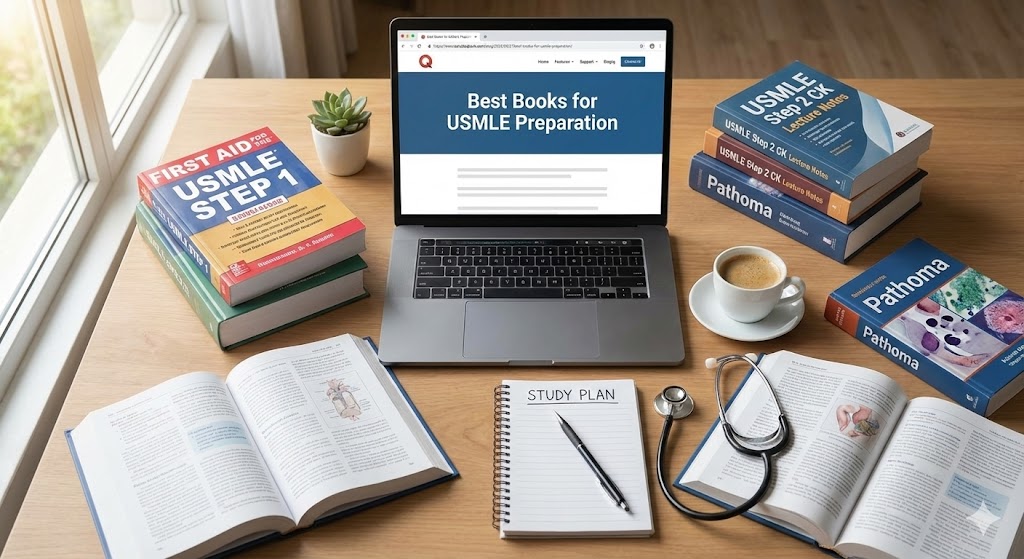
Best Books for USMLE Preparation

Best Books for USMLE Preparation

The United States Medical Licensing Examination (USMLE) is widely regarded as one of the most demanding medical licensing exams in the world. Across its three Steps, the USMLE assesses everything from foundational medical sciences to real-world clinical decision-making and independent patient management.

With such a broad syllabus, preparing without the right study resources can be overwhelming. Many students waste valuable time on outdated or low-yield materials, making preparation harder than it needs to be. Choosing the correct books—and knowing how to use them—is essential for efficient and effective USMLE preparation.

Below is a curated, up-to-date guide to the best books and resources for USMLE Step 1, Step 2 CK, and Step 3, along with guidance on how to use them strategically.

Types of USMLE Preparation Resources

To prepare thoroughly for the USMLE, most successful candidates rely on four core resource types:

1. Textbooks

Textbooks provide structured explanations and conceptual clarity. They are most useful early in your preparation to build or reinforce foundational knowledge.

2. Question Banks

Question banks are the cornerstone of USMLE success. They expose you to exam-style questions, teach you how concepts are tested, and help you develop clinical reasoning and time management skills.

3. Flashcards

Flashcards are ideal for active recall and spaced repetition. They are especially helpful for memorizing facts, formulas, associations, and high-yield details closer to exam day.

4. Case-Based Resources

Case studies help bridge theory and practice, sharpening clinical reasoning skills—particularly important for Step 2 CK and Step 3.

Best Resources for USMLE Step 1 (Pass/Fail Era)

Although USMLE Step 1 is now Pass/Fail, it remains critically important. A strong Step 1 foundation directly impacts performance on Step 2 CK, which is numerically scored and heavily weighted in residency selection.

1. First Aid for the USMLE Step 1

Widely regarded as the gold standard for Step 1 preparation, First Aid provides a concise, high-yield overview of every tested subject. Its bullet-point format, mnemonics, and diagrams make it ideal for repeated review. Updated annually, it remains aligned with the latest exam blueprint.

2. Kaplan USMLE Step 1 Lecture Notes

This seven-volume series offers in-depth coverage across disciplines such as pathology, pharmacology, physiology, biochemistry, anatomy, microbiology, and behavioral sciences. It is best suited for students who want a deeper conceptual understanding before transitioning fully to question-based learning.

3. CanadaQBank – USMLE Step 1

Although not a traditional book, CanadaQBank is a core learning resource for Step 1. It offers:

  • 3,000+ high-quality USMLE-style MCQs

  • Timed and tutor modes

  • Detailed explanations with clinical pearls and lab values

  • Performance analytics by subject

Question-based learning remains essential—even in the Pass/Fail era.

4. Zanki (Anki Deck)

Zanki is a popular, community-built flashcard deck based on First Aid, Kaplan, and other core resources. With nearly 20,000 cards organized by system, it supports long-term retention through spaced repetition.

Best Books for USMLE Step 2 CK

USMLE Step 2 CK focuses on clinical knowledge, diagnosis, and management—and is now the most important exam for residency applications.

1. First Aid for the USMLE Step 2 CK

This system-based review condenses essential facts into bullet points, tables, and management algorithms. It is ideal for reinforcing concepts learned through question banks.

2. Step-Up to USMLE Step 2 CK

A well-structured text with concise chapters, flowcharts, and end-of-section clinical cases. It provides an excellent framework when paired with a strong QBank.

3. USMLE Step 2 Secrets

This pocket-sized book uses a question-and-answer format to highlight high-yield facts and exam strategies. It is especially useful for rapid review in the final weeks.

4. Master the Boards – USMLE Step 2 CK

Authored by Dr. Conrad Fischer, this book emphasizes exam-style vignettes, “buzzwords,” and common pitfalls. It is best used after core content review to refine test-taking skills.

Best Books for USMLE Step 3

USMLE Step 3 assesses whether you can practice medicine independently, including outpatient management and emergency decision-making.

1. First Aid for the USMLE Step 3

This book covers both multiple-choice questions and Computer-Based Case Simulations (CCS). It includes algorithms, CCS strategies, and high-yield ambulatory care topics.

2. Crush Step 3 CCS

Dedicated entirely to CCS preparation, this resource provides structured case walkthroughs, command templates, and time-saving strategies—making it essential for the simulation component.

3. Master the Boards – USMLE Step 3

Focused on management decisions and commonly tested scenarios, this book highlights “don’t miss” diagnoses and practical clinical reasoning.

4. Kaplan USMLE Step 3 Lecture Notes

Kaplan’s multi-volume series offers comprehensive coverage across core specialties. It is best for candidates who prefer structured reading before intensive practice.

How to Use These Resources Effectively

  • Do not try to use every book simultaneously

  • Choose 1–2 core texts per Step

  • Prioritize question banks over passive reading

  • Use flashcards consistently for retention

  • Focus on clinical application, not memorization

Final Thoughts

There is no single “perfect” book for the USMLE. Success comes from using high-yield, up-to-date resources in a strategic way—combined with consistent question-based practice.

CanadaQBank complements these books by helping you apply knowledge, identify weaknesses, and simulate real exam conditions across all USMLE Steps.

USMLE Step 2 CK Exam Dates 2026

USMLE Step 2 CK Exam Dates 2026

The United States Medical Licensure Examination (USMLE) Step 2 CK (Clinical Knowledge) is the second major milestone for medical graduates seeking licensure in the United States. Unlike Step 1, which emphasizes foundational biomedical sciences, Step 2 CK focuses on applied clinical knowledge and patient-centered care.

This exam evaluates whether candidates can integrate medical knowledge across disciplines and apply it to real-life clinical scenarios. Rather than testing rote memorization, Step 2 CK assesses clinical reasoning, diagnostic judgment, and management decisions, all of which are essential for safe and effective patient care in the U.S. healthcare system.

Step 2 CK is jointly administered by the National Board of Medical Examiners (NBME) and the Federation of State Medical Boards (FSMB). It is typically taken during the third or fourth year of medical school by U.S. students and by international medical graduates (IMGs) pursuing U.S. residency training.

Step 2 CK serves as the bridge between basic sciences (Step 1) and supervised clinical practice in residency. Since the permanent discontinuation of the Step 2 CS exam in 2021, Step 2 CK has become even more critical. Scores are reported in a three-digit format, and since the scoring update in recent years, the passing score remains 214 as of 2026.

A strong Step 2 CK score plays a major role in residency applications, as it demonstrates clinical competence, readiness for responsibility, and the ability to manage patients effectively.

Exam Format and Structure (2026)

The USMLE Step 2 CK remains a nine-hour, computer-based examination, administered in a single day at Prometric testing centers worldwide.

Key Exam Features

  • 318 multiple-choice questions
  • Divided into 8 blocks, each lasting 60 minutes
  • Each block contains up to 40 questions
  • 45 minutes of total break time
  • 15-minute optional tutorial (can be skipped to add extra break time)

Candidates may accumulate additional break time by finishing blocks early or skipping the tutorial.

Content Coverage

Step 2 CK is built around an integrated, clinically oriented content outline, encompassing 18 major categories that span multiple organ systems and medical disciplines.

Subjects tested include:

  • Internal Medicine
  • Surgery
  • Pediatrics
  • Obstetrics & Gynecology
  • Psychiatry
  • Preventive Medicine
  • Emergency Medicine
  • Ethics and Patient Safety

Questions frequently require interpretation of:

  • Laboratory data
  • Diagnostic imaging
  • ECGs
  • Clinical photographs
  • Pathology (gross and microscopic)

The exam is designed to test your ability to synthesize information, prioritize diagnoses, and choose the most appropriate next step in patient care.

USMLE Step 2 CK Exam Dates for 2026

Unlike some standardized exams, USMLE Step 2 CK does not have fixed global exam dates.

Instead:

  • You select a three-month eligibility period
  • The exam is offered year-round
  • Available dates depend on Prometric center availability

You may choose any date within your eligibility window, but you cannot schedule more than six months in advance. Popular periods—such as summer months or dates close to residency application deadlines—tend to fill quickly.

How to Register for Step 2 CK in 2026

You can apply for Step 2 CK without having taken Step 1, which is a common misconception.

Registration Pathways

  • U.S. & Canadian medical students: Register through the NBME
  • International Medical Graduates (IMGs): Register through the ECFMG

Once your application is approved, you will receive a scheduling permit by email, which includes:

  • Your eligibility period
  • A permit number required for scheduling

You will then book your exam through the Prometric website by entering:

  • Your scheduling permit number
  • Your first and last name (must match your ID exactly)

USMLE Step 2 CK Fees (Updated for 2026)

As of 2026, the USMLE Step 2 CK fees are:

  • Exam registration fee: $1,020
  • International test delivery surcharge: $230 (for exams taken outside the U.S. and Canada)
  • Rescheduling fee: Starts at $100, depending on how close the change is to your exam date

Additional fees may apply for:

  • Eligibility period extensions
  • Late rescheduling or cancellations

Because fees are subject to change, always confirm the latest costs on the official USMLE or ECFMG website.

Tips for Scheduling Your Exam

1. Apply Early

Submit your application 6–8 weeks in advance, especially if you are an IMG. ECFMG verification can take additional time, and delays may limit date availability.

2. Choose Your Eligibility Period Wisely

Select a window that aligns with your study plan and avoids major academic or personal commitments. This gives you flexibility if unexpected issues arise.

3. Check Your Documents

Ensure your government-issued ID exactly matches the name on your application and scheduling permit. Even small discrepancies can prevent you from testing.

4. Plan Financially

Beyond the exam fee, consider:

  • Travel expenses
  • Accommodation
  • Rescheduling or extension fees

Choosing a nearby Prometric center can significantly reduce costs and stress.

5. Visit the Test Center (If Possible)

Knowing the route and location in advance can eliminate unnecessary anxiety on exam day.

Preparing for Step 2 CK with CanadaQBank

Effective preparation for Step 2 CK requires consistent practice, realistic simulations, and targeted review—and this is where CanadaQBank excels.

Why CanadaQBank?

  • Thousands of high-yield, exam-style MCQs
  • Coverage of all major Step 2 CK disciplines
  • Questions designed to mirror real exam difficulty and structure
  • Detailed explanations that reinforce clinical reasoning
  • Timed Mode for exam-day simulation
  • Tutor Mode for focused learning
  • Advanced performance analytics to identify weak areas

CanadaQBank allows you to refine your diagnostic thinking, improve time management, and build confidence through repeated exposure to exam-level questions.

Final Thoughts

The USMLE Step 2 CK in 2026 remains one of the most important exams in a physician’s journey toward U.S. licensure. With its strong emphasis on clinical reasoning, patient management, and integrated medical knowledge, success requires more than memorization—it demands strategy, consistency, and high-quality practice.

By planning your eligibility period early, understanding the exam structure, managing fees wisely, and preparing with trusted resources like CanadaQBank, you place yourself in a strong position to achieve an excellent score and stand out in residency applications.

10 Effective Strategies to Conquer the USMLE Step 1

10 Effective Strategies to Conquer the USMLE Step 1

The USMLE Step 1 is a critical milestone for medical students aiming to practice medicine in the United States. It serves as a gateway to residency programs and ultimately to medical licensure. Although Step 1 is now reported as pass/fail, strong performance still reflects solid foundational knowledge and prepares you for success in USMLE Step 2 CK and beyond.

Achieving success on Step 1 requires dedication, structure, and smart preparation. Below are 10 proven strategies that will help you prepare effectively, retain knowledge, and approach the exam with confidence.

Tip 1: Start Early and Create a Study Schedule

Early planning is one of the most effective ways to prepare for Step 1. Most students benefit from beginning dedicated preparation 6–12 months before the exam, allowing enough time to thoroughly cover and revise all tested systems.

Starting early is only half the battle—you must also create a personalized, structured study schedule.

How to Build an Effective Study Schedule:

  • Determine how many hours you can realistically study each day
  • Assess your baseline knowledge, learning style, and peak focus times
  • Allocate more time to weaker subjects
  • Include regular review days
  • Build buffer time for unexpected delays
  • Schedule practice exams at consistent intervals

Tip 2: Curate and Stick to High-Yield Resources

There is no shortage of USMLE Step 1 resources, and trying to use too many can be counterproductive. Instead, carefully curate a small set of high-yield resources and commit to them.

Popular and trusted resources include:

  • First Aid for the USMLE Step 1 – the cornerstone for high-yield review
  • Pathoma – excellent for concise pathology explanations
  • SketchyMedical – effective visual mnemonics for microbiology and pharmacology

Consistency with a limited number of quality resources is far more effective than jumping between multiple platforms.

Tip 3: Master Your Question Bank

A high-quality question bank is one of the most powerful tools for Step 1 preparation.

CanadaQBank is a trusted QBank offering:

  • 3,000+ challenging, exam-style questions
  • Detailed explanations for every answer
  • Timed and untimed modes
  • Custom tests by system or mixed subjects
  • An MCQ interface that mirrors the real exam, including normal lab values

How to Use CanadaQBank Effectively:

  • Start early, even alongside coursework
  • Complete questions system by system before switching to mixed blocks
  • Review every explanation, not just incorrect answers
  • Aim to complete the QBank at least once
  • Use a second pass to reinforce weak areas

Tip 4: Practice Active Learning Techniques

Passive reading alone is not enough for Step 1 success. Active learning forces you to recall, apply, and integrate information, which is exactly what the exam tests.

Effective active learning methods include:

  • Practice questions (QBanks)
  • Self-quizzing
  • Rapid review of recently learned topics
  • The teach-back method (explaining concepts aloud to someone—or yourself)

Active learning significantly improves retention and prepares you for complex, integrated questions.

Tip 5: Take Full-Length Simulated Exams

Full-length practice exams are essential for building stamina, pacing, and mental endurance. Step 1 is an intense, multi-hour exam, and fatigue can impact performance if you are unprepared.

Recommendations:

  • Take 2–3 full-length simulated exams during your dedicated study period
  • Space them throughout your schedule
  • Complete one exam at least one week before test day
  • Use results to identify weak areas and adjust your study plan

Tip 6: Review Weak Areas Consistently

Every student has strengths and weaknesses. The key is identifying weak areas early and addressing them consistently.

To do this:

  • Track performance in your question bank
  • Identify recurring mistakes
  • Schedule weekly reviews for weaker subjects

Targeted review leads to the greatest score improvements.

Tip 7: Use Visual Learning Aids

Visual aids make complex topics easier to understand and remember. Diagrams, flashcards, videos, and mnemonics are especially useful for:

  • Anatomy
  • Pharmacology
  • Biochemistry

Visual learning enhances long-term retention and helps you recall critical details under exam pressure.

Tip 8: Focus on Progress, Not Perfection

Setbacks are inevitable, even with the most detailed study plan. What matters is consistent progress, not perfection.

Small daily improvements compound over time. Track your progress regularly, adjust when needed, and keep moving forward—even on difficult days.

Tip 9: Take Care of Your Mental and Physical Health

Burnout and chronic stress negatively impact memory, focus, and performance. Taking care of your health is not optional—it’s essential.

Self-Care Essentials:

  • Sleep: 7–8 hours per night for memory consolidation
  • Exercise: Regular activity improves focus and reduces stress
  • Breaks: Use techniques like Pomodoro to maintain productivity
  • Nutrition: Eat balanced meals to sustain energy
  • Stress management: Meditation, deep breathing, or mindfulness

Tip 10: Stay Consistent and Avoid Cramming

Step 1 preparation is a long-term process. Cramming in the final weeks leads to stress and poor retention.

Stay consistent by:

  • Studying daily, even if briefly
  • Reviewing material regularly
  • Setting realistic daily goals
  • Using accountability partners if needed

Consistency builds durable knowledge and confidence—cramming does not.

Conclusion

Conquering the USMLE Step 1 requires early planning, disciplined consistency, smart resource selection, and self-care. By applying these 10 strategies and using trusted tools like CanadaQBank, you can build a strong foundation that sets you up for success on Step 1 and beyond.

Preparation is not about doing more—it’s about doing the right things consistently.

Comprehensive Guide to the Best Books for PLAB Preparation

Comprehensive Guide to Best Books for PLAB Preparation

The PLAB (Professional and Linguistics Assessment Board) exams will not only test your theoretical knowledge but also your ability to make informed decisions, especially in emergency situations. There are many resources available, but books remain a trusted way to engage with raw knowledge—specifically, the right books. In this article, we’ll walk you through the most important study materials you will need for the PLAB exam. These materials cover everything from clinical medicine and specialties to exam practice and OSCE skills.

Books for Effective PLAB Preparation

If you want to make the most of your study preparations for the PLAB exam, here is a comprehensive list of books to consult.

Oxford Handbook of Clinical Medicine (OHCM)

This widely used medical textbook has received positive reviews from teachers, students, and educators worldwide. It is often referred to as the “holy book” of clinical medicine. The content is presented in a concise and easy-to-read format, with clear headings and bullet points. Its 600+ pages cover clinical presentations and symptoms, diseases and disorders, diagnostics, conversion charts, and much more. The portable size of this book makes it easy to use in clinical settings and for students to revise before exams. Overall, the OHCM is a valuable resource for both PLAB 1 and 2 candidates.

Get Through PLAB Part 1

Get Through PLAB Part 1 has helped thousands of medical graduates in the UK. This book contains about 500 practice questions that align with the PLAB 1 standard. These questions are organized by topic and difficulty level, with comprehensive answers that guide you to the specific themes and topics you need to revisit. Additionally, the book includes a mock exam paper that you can use to practice under timed conditions. It also features an index for easy reference; for example, if you want questions related to hypertension, you can look up “hypertension” in the index to find the exact page numbers that cover this topic. By covering the entire PLAB 1 syllabus, it remains one of the most comprehensive study materials for this exam.

PLAB 2 Objective Structured Clinical Examination (OSCE) Manual

As the name implies, this is more than just a study book—it’s a manual for anyone preparing for the Practical Assessment (OSCE) exam. This examination tests clinical skills and patient interaction, so this book explains the exam format and provides realistic clinical scenarios. The authors also highlight common mistakes made by PLAB 2 candidates and how to avoid them. You will find this book not only academically useful but also very insightful.

Oxford Handbook of Clinical Specialties

Like the OHCM, this book is rich in detail and covers a wide range of clinical topics. It encompasses over 30 specialties, including cardiology, nephrology, neurology, surgery, psychiatry, pediatrics, respiratory medicine, and more. Authored by experts in each field, this manual conveys complex ideas in the simplest way possible. You will find useful flowcharts and diagrams to help you understand concepts better, especially if you are a visual learner. This book is valuable not only for PLAB candidates but also for junior doctors and healthcare professionals seeking to further their knowledge.

PLAB: 1700 Multiple Choice Questions

This study material is one of the most efficient resources for the PLAB exam, especially if you learn better with MCQs. It contains approximately 1,700 multiple-choice questions designed to test your critical thinking and application of concepts. These questions are divided into three sections: Basic Sciences, Clinical Sciences, and Clinical Practice, and are presented in a format similar to the actual PLAB exam. As you practice, you can compare your answers with the explanations provided in the book. With this resource, you can rest assured that the format of your PLAB exam won’t take you by surprise.

Oxford Handbook of Accident and Emergency Medicine

This book is an invaluable asset for those preparing for PLAB 2. The Oxford Handbook of Accident and Emergency Medicine serves as a trusted guide for managing acute medical emergencies. It covers a wide range of emergency topics that are typically tested in PLAB 2. Additionally, it contains practical advice on the assessment, diagnosis, and management of acute conditions, aligning well with the exam’s focus. Its portable design makes it useful for healthcare professionals working in fast-paced Accident and Emergency environments.

PLAB: 1000 Extended Matching Questions

Self-assessment is important for the PLAB exam, and this material is an excellent choice. It contains 1,000 EMQs covering various specialties, most of which test your ability to match a clinical scenario with the appropriate answer. Like the 1,700 MCQs, it is divided into three main sections covering topics such as surgery, obstetrics, pediatrics, and gynecology. The goal of this book is to enhance your critical thinking and decision-making skills, which closely mirrors how the actual PLAB exam will assess you. Regular practice with this material will help you identify gaps in your knowledge and areas needing improvement.

Conclusion

There you have it—the best study books to help you tackle the PLAB exams. However, keep in mind that not all of these books will meet all your academic needs. This guide allows you to choose the ones that best suit you and your preferred study style.

These books should supplement a more comprehensive study approach. We advise you to consult other valuable resources like virtual courses/classes and question banks. With CanadaQBank, you have access to hundreds of questions across various topics. Feel free to explore the other resources available to help you. And remember to stay focused—you’ll need it. Good luck on your PLAB journey!

Importance of Self-Assessment in MCCQE1 Preparation

Importance-of-Self-Assessment-in-MCCQE1-Preparation

It is no longer news that the MCCQE1 is an inevitable step in the journey to becoming a licensed physician in Canada. The stakes are high, and there is no such thing as over-preparation. You may already know all the tips to acing your MCCQE 1 exam but self assessment is equally important.

When you self assess, you examine your strengths as well as your performance, based on the criteria of the exam. Think of it as a parameter that will help you measure where you’re at and what you want to achieve. Thereafter, you can take the appropriate steps and remedial measures that match your pace or study technique.

This article will give you a clear picture of the process of self assessment and why you need it before your MCCQE1 exam.

What Should I Expect in the Exam?

In the process of preparing for this test, knowing what’s ahead of you will solve half of the problem. When you understand the structure of the exam you can identify your own gaps. Here is what to expect in your MCCQE Part 1 test.

It is a 1-day computer-based exam that qualifies candidates to enter supervised practice. You can take the exam in an available prometric test center or via remote proctoring on a first come, first served basis. It’s a 7 hour exam divided into morning and afternoon sessions. The morning session lasts about 4 hours to answer 210 multiple questions and up to three and a half hours in the afternoon session for the clinical decision making component.

The CDM component of the MCCQE1 test includes 38 case scenarios, each with some questions attached. This case description assesses your decision-making ability in various situations. You must provide your choice in areas such as diagnosis, prescription, gathering information and so on, as you would if given an actual patient the overall number of questions ranges from 60 to 70 across all 38 cases and the structure of the questions will require that you provide short write-in answers.

Why Do I Need Self-assessment Before this Test?

Now that you understand what you’re up against, it is equally important that you understand why you must evaluate yourself before you take the MCCQE1 test.

1. Less Anxiety: Exam anxiety is a normal feeling, especially with high stake exams such as this one, but self-assessment can help reduce that anxiety because you know what to expect and you’re sure that you have worked on your weaknesses. You can now shift focus from “I hope I passed” to “I’ve worked hard to improve”. This attitude and approach over time reduces anxiety, improves your performance, helps you think more clearly and helps you make better decisions under pressure.

2. Time Management: When you take a self assessed test, it helps you realize how much time you will potentially spend on the exam. The more you practice, the better you get at time allocation and management. There are self-assessment websites such as CanadaQbank where you can set the level of difficulty you want your questions to be, so as you continue to practice over and over you can progress to increasing levels of difficulty with shorter time limits. In this way, on the examination day, you could finish all of your questions with time to spare.

3. Topic Revision: Self-evaluation before a test works best when you revise each topic as you study. You don’t have to wait until you’re done with all of your reading before testing your knowledge. CanadaQbank offers this feature which helps streamline your revision and studying, and helps you know what topics to pay closer attention to. You could also take tests repeatedly so as to realize and work on specific areas that come up as weaknesses.

4. Confidence in your Preparedness: Being prepared for an exam can make you much more confident. It is one thing to self-assess, it is another to self assess ahead of time. This affords you a substantial amount of time to prepare effectively and turn your weaknesses into strengths.

Make sure to start your preparations and revisions early enough so you’re not overwhelmed when the exams are close. Crash reading is an undeniable contributor to the development of unhealthy reading habits therefore you’re advised to start your reading as early as possible so you can develop healthy study patterns.

All of this strengthens your assurance and yourself as you make all the necessary preparations you need to ace the exams.

Make sure to start your preparations and revisions early enough so you’re not overwhelmed when the exams are close. Crash reading is an undeniable contributor to the development of unhealthy reading habits therefore you’re advised to start your reading as early as possible so you can develop healthy study patterns.

All of this strengthens your assurance and yourself as you make all the necessary preparations you need to ace the exams.

How Do I Self-assess?

To take the self-assessment, you need to sign up to a question bank website. An example is Canadaqbank.com, which has all of the features that you will need for your preparations. as mentioned in this article. You can download the mobile app or use the website online. Access to all the features will require a subscription from you which will attract an affordable fee.

Once you have subscribed, you’ll be given login details and you will be able to access all you need. You can streamline your question, then review your tests. Additionally, there are links to demo videos on the app or website, which will help you understand how to navigate the app and the website.

You will also need to go through the MCC’s official website so you’re aware of the recommended books and study materials. The site helps you access resources that will go a long way in guiding your preparations.

Lastly, you can try peer assessment. If you have a couple of friends or colleagues who are also taking the exams, it’s not a bad idea to hang out and evaluate each other’s performance.

Conclusion

As you self-assess, try not to be hard on yourself. When you find your strengths, give yourself a part on the back and leverage on these strengths. If you find weaknesses, give yourself time to process and work through them. As you make all these preparations, try not to see the examination as a hurdle, see it as a bridge that brings you a step closer to your dreams. Don’t forget to explore the many resources on CanadaQbank that can make this journey smoother for you. Good luck!

Can I Work in Canada as a Doctor Without MCCQE Part 1?

Can I Work in Canada as a Doctor Without MCCQE1?

If you are a medical doctor or a doctor in training considering practising medicine in Canada, you are likely asking one critical question: Can I work in Canada without taking the MCCQE Part 1?

The short answer is: sometimes—but in most cases, MCCQE Part 1 is still required.
The long answer depends on your training background, licensing pathway, and province of practice.

This article explains what the MCCQE Part 1 is, why it exists, and the limited situations in which a doctor may practise in Canada without it.

What Is the MCCQE Part 1?

The Medical Council of Canada Qualifying Examination (MCCQE) Part 1 is a national exam designed to assess whether a medical graduate has the clinical knowledge, decision-making skills, and professional judgment required for entry into supervised medical practice in Canada.

It ensures that all physicians—Canadian or international—meet a common national standard of care.

MCCQE Part 1 Exam Structure

The MCCQE Part 1 is a one-day, computer-based examination, offered multiple times per year worldwide.

Exam Components:

  • 210 Multiple-Choice Questions (MCQs)
    • 4 hours
  • 38 Clinical Decision-Making (CDM) cases
    • 3.5 hours

Total exam time: ~7.5 hours
Delivery: Prometric test centres or approved remote proctoring
Scoring: Combined MCQ + CDM score

The exam is built around the CanMEDS framework, ensuring candidates demonstrate not only medical knowledge, but also professionalism, communication, ethics, and patient-centred care.

Why Is MCCQE Part 1 Required?

Canada’s healthcare system prioritizes patient safety, ethical practice, and standardized clinical competence. The MCCQE Part I ensures that:

  • International and Canadian graduates meet the same clinical benchmark
  • Physicians can safely manage patients within the Canadian healthcare context
  • Clinical reasoning aligns with Canadian guidelines, ethics, and public health principles

Passing the exam demonstrates that you are prepared to begin supervised clinical practice (postgraduate training or assessment) in Canada.

Can You Work in Canada Without MCCQE Part 1?

Yes — in Limited Situations

You may practise in Canada without MCCQE Part I if you qualify under specific alternative pathways, which are usually provincial and temporary.

No — for Full Licensure

You cannot obtain the Licentiate of the Medical Council of Canada (LMCC) or full independent licensure without eventually meeting MCC requirements (which usually include MCCQE Part I).

Situations Where MCCQE Part 1 May Not Be Required Initially

1. Practice-Ready Assessment (PRA) Pathways

Some provinces allow experienced IMGs to practise under supervision without MCCQE Part I at the start.

  • Provincial (not national)
  • Highly competitive
  • Time-limited and conditional
  • MCCQE Part I is often still required later

2. US-Trained Physicians

In recent years, some provinces have eased pathways for doctors who:

  • Completed ACGME-accredited residency
  • Passed USMLE Step 1–3
  • Are board-certified in the U.S.

However:

  • This varies by province
  • MCCQE Part I may still be required for LMCC
  • Policies change frequently

3. Specialist Recognition Pathways

Some Royal College or provincial routes may allow restricted or provisional specialist licences without MCCQE Part I initially.

These are:

  • Specialty-specific
  • Province-specific
  • Often require additional assessments or exams

4. Academic, Research, or Non-Clinical Roles

You may work in Canada without MCCQE Part I if you are:

  • A researcher
  • A clinical observer
  • A lecturer without independent patient care

These roles do not allow unsupervised clinical practice.

When Is MCCQE Part 1 Mandatory?

You must pass MCCQE Part 1 if you want to:

  • Obtain LMCC
  • Enter Canadian residency training
  • Progress beyond provisional or restricted licences
  • Practise independently across provinces
  • Have long-term career mobility in Canada

For most IMGs, MCCQE Part I remains unavoidable.

Eligibility for MCCQE Part 1

You can apply if you are:

  • A graduate or final-year student of:
    • A CACMS-accredited Canadian medical school
    • A U.S. osteopathic school (AOA-accredited)
    • A medical school listed in the World Directory of Medical Schools with a Canada sponsor note
  • Verified through ca

Once approved, you receive a 12-month eligibility window to schedule the exam.

How to Apply for MCCQE Part 1

  1. Create an account at ca
  2. Submit identity and medical credentials
  3. Ensure documents are properly certified
  4. Pay the application and exam fees
  5. Schedule your exam through Prometric

Processing may take up to 4 weeks, so early application is strongly advised.

How to Prepare and Pass MCCQE Part 1

The MCCQE Part I tests your ability to function as a well-rounded Canadian physician across the CanMEDS roles:

  • Medical Expert
  • Communicator
  • Collaborator
  • Leader
  • Health Advocate
  • Professional
  • Scholar

Success requires:

  • Understanding the MCC blueprint
  • Practising clinical reasoning
  • Strengthening weak areas
  • Using exam-focused resources

Platforms like CanadaQBank provide:

  • High-yield MCCQE-style questions
  • MCQs + CDM case simulations
  • Detailed explanations aligned with Canadian practice
  • Performance analytics by domain

Conclusion

While a small number of doctors may begin practising in Canada without MCCQE Part 1 under special pathways, most physicians will eventually need to pass it to build a stable, long-term medical career in Canada.

The MCCQE Part 1 is not just an exam—it is a gateway to professional credibility, national mobility, and full integration into the Canadian healthcare system.

With early planning, structured preparation, and the right resources, passing the MCCQE Part 1 is absolutely achievable.

CanadaQBank is here to support you every step of the way.

Ultimate Guide to the PLAB 1 Exam

The UK beckons—its hospitals alive with opportunity, diversity, and world-class clinical training. But before you can don your stethoscope and step into the NHS as an international medical graduate (IMG), one critical milestone stands in your way: PLAB 1.

PLAB 1 is not just an exam—it is your gateway into the UK medical system. Designed to assess whether you possess the knowledge and judgment expected of a doctor entering UK Foundation Training, it marks the beginning of a new chapter in your medical career.

This comprehensive guide provides everything you need to know about PLAB 1 in 2026, including exam format, eligibility, scoring, UK MLA alignment, and proven preparation strategies to help you succeed with confidence.

What Is PLAB 1? A Clear Overview

PLAB Part 1 is a computer-based written examination that tests your ability to apply medical knowledge to real-life clinical scenarios at the level of a UK Foundation Year 2 (FY2) doctor.

PLAB 1 Exam Format (2026)

  • 180 Best-of-Five MCQs
  • Single paper
  • 3 hours duration
  • Computer-based
  • Administered by the General Medical Council (GMC)

Important Update:
PLAB 1 no longer includes EMIs (Extended Matching Items). The exam consists entirely of best-of-five MCQs.

Each question presents a realistic clinical vignette requiring you to choose the most appropriate diagnosis, investigation, or management step.

Understanding the Question Style

PLAB 1 questions are clinically driven, not theory-heavy. Each vignette includes:

  • Patient demographics
  • Presenting complaint
  • Relevant medical and social history
  • Examination findings or investigation results

Your task is to make safe, practical, UK-appropriate clinical decisions. The exam rewards clarity, prioritisation, and adherence to NHS best practices—not obscure facts or specialist knowledge.

PLAB 1 Syllabus: What You’re Tested On

The PLAB 1 syllabus aligns with the UK Foundation Programme Curriculum and the UK Medical Licensing Assessment (UK MLA) content map.

Core areas include:

  • General Medicine
  • General Surgery
  • Obstetrics & Gynaecology
  • Paediatrics
  • Psychiatry
  • General Practice
  • Emergency Medicine
  • Medical Ethics & Law
  • Patient Safety and Communication

The exam intentionally avoids specialist-level content. Focus on common, high-yield conditions and safe first-line management.

Eligibility for PLAB 1 (2026)

You are eligible for PLAB 1 if you:

  • Hold an acceptable Primary Medical Qualification (PMQ) listed in the World Directory of Medical Schools
  • Meet the GMC’s good character and fitness to practise requirements
  • Have evidence of English language proficiency
  • Create and maintain a GMC Online account

Applications, document uploads, and exam bookings are all managed through GMC Online. Because verification can take several months, early preparation is strongly advised.

English Language Requirements

You must demonstrate English proficiency through one of the following:

  • IELTS Academic:
    • Overall score 5
    • Minimum 0 in each band
  • OET Medicine:
    • Minimum Grade B in all sections

If your medical degree was taught and examined entirely in English, limited exemptions may apply—always confirm directly with the GMC.

Booking the PLAB 1 Exam

Once your English language evidence is approved, you can book PLAB 1 through GMC Online.

  • PLAB 1 fee (2026): £255
  • Payment via international debit or credit card

PLAB 1 Exam Dates & Locations

PLAB 1 is held four times a year in the UK and internationally.

UK Test Centres Include:

  • London
  • Manchester
  • Birmingham
  • Edinburgh
  • Cardiff
  • Sheffield
  • Oxford
  • Belfast
  • Newcastle

International Test Centres:

  • Available in over 20 locations across 15+ countries

Booking windows usually open months in advance, and seats fill quickly—early booking is essential.

PLAB 1 Results & Passing Standard

  • Results are released approximately 6 weeks after the exam
  • Accessible via GMC Online
  • Each question carries 1 mark
  • The pass mark is set using the Angoff method

There is no fixed pass score, but candidates should generally aim for 60–65% accuracy to remain safely above the threshold.

PLAB 1 Pass Rate

PLAB 1 pass rates vary by sitting and candidate demographics. Historically, the average pass rate ranges between 65–70%.

Since the introduction of the UK MLA framework, quality assurance has increased, making structured preparation more important than ever.

Proven Strategies to Pass PLAB 1

1. Targeted Revision

Identify weak areas early using practice questions and revise strategically. Don’t abandon strengths—refine them.

2. Master Time Management

Plan a realistic study schedule. Learn to answer questions efficiently and avoid overthinking.

3. Practice Under Exam Conditions

Regular mock exams are essential. Platforms like CanadaQBank offer timed tests, analytics, and real exam-style questions.

4. Develop Mental Resilience

PLAB 1 preparation can be stressful. Build stress-management habits—exercise, breathing techniques, and adequate rest matter.

5. Use Multiple Learning Resources

Combine textbooks, question banks, videos, and notes to match your learning style.

6. Read Questions Carefully

Look for keywords, safety cues, and UK-specific management preferences.

7. Never Leave a Question Blank

Educated guesses improve your odds—there is no negative marking.

Tips for PLAB 1 Question Types

Best-of-Five MCQs

  • Read all options before choosing
  • Eliminate unsafe or irrelevant answers
  • Select the most appropriate option, not just a correct one

PLAB 1 in the UK MLA Era (2026)

The UK Medical Licensing Assessment (UK MLA) is now fully implemented. PLAB 1 continues to serve as the licensing route for International Medical Graduates, with its content and standard aligned to the MLA framework.

This means:

  • No major structural changes
  • Greater emphasis on patient safety and applied clinical reasoning
  • Your current PLAB-focused preparation remains fully valid

Final Words: Your Journey Beyond PLAB 1

Passing PLAB 1 is more than clearing an exam—it is the first step toward a fulfilling medical career in the UK. With structured preparation, smart resources, and disciplined practice, success is entirely achievable.

Stay updated, stay consistent, and approach the exam with confidence.

PLAB 1 Preparation with CanadaQBank

CanadaQBank supports PLAB aspirants with:

  • High-quality PLAB-style MCQs
  • Detailed explanations aligned with UK guidelines
  • Timed mock exams
  • Performance tracking and analytics
  • Updated content reflecting UK MLA standards

Prepare with confidence. Prepare with CanadaQBank.