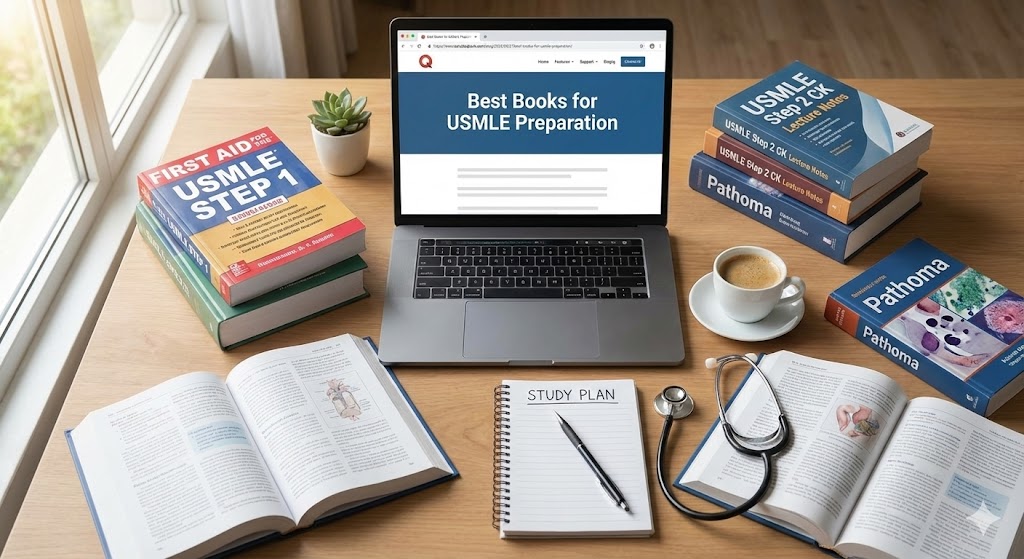
As the saying may go, “he who fails to plan, plans to fail,” but in hindsight, things can get more complicated than just planning and preparing. And in preparing for one of the most important exams in the history of medicine, much can be said about this popular maxim that has revolved around our lives.
The USMLE is a test undertaken by students and candidates who aspire to be doctors someday, practicing their field with the needed license that would grant them the freedom to do so. Therefore, passing the exam can be a crucial point in the realization of this dream.
But what happens when this medical dream starts to appear distant from you? That moment when you begin to realize that you might not be getting past Step 1, which is the first examination to be written? What do you think could have been the problem?
Well, here are 10 common reasons you might not be passing your USMLE Step 1 this year. It’s important you know this.
1. Lack Of Will To Study
This is the first vice considered to lead to failing the USMLE Step 1, and it is the most common reason among irresolute folks. In our world of thrilling movies, saucy shows, and amusements that could get you hooked in a second, it would be no surprise to see anyone derailing from what is important, putting it off to a later date. Sometimes, these things go unvisited, left to collect dust where it has been kept.
The same goes for those getting ready for the USMLE Step 1. They might have started work toward the exams, getting materials ready, asking relevant questions, and visiting the library for resources that could help. However, their will is not enough to maintain this energetic fervor they have created for themselves, jumping into other things and losing sight of what matters – passing the USMLE.
It is very important to stay steadfast in the process of equipping yourself with the necessary knowledge needed for the exams, even amidst all the worldly distractions life might throw your way. The USMLEStep 1 is the first obstacle one needs to eliminate so as to progress to the next step, and when long hours of sleep, TV time, and catching up with friends are all that dominate your time, you might end up seeing the same sets of questions next year.
2. Failing to Plan Properly
This doesn’t concern making a study plan alone, as misplaced priorities can also lead to you failing the exam. Lots of students, when preparing for the exam, would have all the right motivations, gather up their tools for studying, and go through them without specifics in mind. This, often than not, throws the student in a motley of activities that end up draining them and giving them anxiety.
When one plans correctly, they set out different tasks for different times, attending to these tasks one after the other, such as studying question banks at one time, and then, practicing said questions at another time, or even studying how the questions are asked and knowing what to put as your answer.
Placing your activities in terms of priority can be a great way to get the most out of your study plan, giving you the advantage to study most and retain more after all the reading and practicing has been done.
3. Utilizing the USMLE Resources
Flippancy can only get you so far in life, and when you are gearing up to sit for an important exam like the USMLE, flippancy can hinder your progress in that regard. Many students would rather consult materials other than the ones provided by the centers responsible for carrying out the exams, believing that these resources might be outdated or not relevant.
But the reverse is the case. Most times, these resources are what could actually help you better your knowledge and skills in the basic sciences that revolve around the USMLE. Resources like the questions banks, e.g.; CanadaQbank, USMLE-focused materials, and the NBME tests can prove to increase your chances of passing the exams.
4. Not Practising The Exam Enough
Just reading for the exam alone is not enough to pass, it can only do so much for you, and retention is not one of them. Unfortunately. Students who rely solely on reading tend to forget that the questions in the exam are set differently from what they are normally used to. And thus, shouldn’t be treated like a regular exam.
Cramming and long-hour reading is not the remedy that greases your path to success, but rather, practicing the exam questions as though it were a real thing, is. Getting your pencil, pen, paper, and questions ready, with your timer to replicate the one-hour timeframe like the real exam, can help boost your adaptability to the kind of pressure you might feel when in the actual exam room.
5. Not Utilizing The NBME Test
This is a prerequisite to the Step 1 exams, a test that shows you where you stand as regards to passing the exams. The NBME test is a self-assessment test that allows you to examine yourself with the same kind of questions the Step 1 exam presents. It has all the characteristics of the Step 1 exam, giving students the chance to determine their score before going for the actual exam.
It is often advised to take the test at the beginning of your preparation, so as to know your strengths and weaknesses. You can do this some weeks after you have studied, or even a month, and keep taking the test until you have attained a high enough score similar to that of the Step 1 exam. It is only when you have gotten your desired score, can you then go for the actual Step 1 exam.
6. Listening To Other Students’ Opinions
Group study and discussions are great. However, it’s important to learn how you understand things. People often have different retention methods and it is often a personal exercise, trying to figure this out. It’s okay to try out several methods that other people propose but ultimately, it’s on you to figure out what works best for you. Also, not all opinions about the exams are correct, as some of them can put a log in your wheel.
When it comes to studying and knowing what works best for you, finding out your strengths and weaknesses, and other nuanced areas of the exam, can be the difference between you and the next student.
7. Time Management
We can feel slightly or overly overwhelmed sometimes, having to remember to do something important, or that a crucial date is approaching. All of these things can weigh heavily on our minds, pushing us to give other things priority, and giving the most important thing less time.
In this very case, studying and adequately preparing for the Step 1 exam can be a daunting task, especially when there is so much to be done and not enough time to do it. This is the mentality many of us have, focusing on one subject so much that other subjects are not touched.
Meanwhile, adequate time management for these subjects could have been the solution one needs to cover most of them. Allotted time periods, focus, and recognition of all important subjects can help give a more rounded scope on the skills needed to pass the Step 1 exam.
8. Not Properly Knowing The Exam Format
This could be another reason students fail the Step 1 exam, not properly acquainting themselves with the way exam questions are set, the time frame for each question, and the way such questions should be answered, can cost the student his or her chances of progressing to the next step.
Understanding the format and structure of the exam can be a great motivation to pass the exam. This is because you would know how to manage your time, answer each question correctly, and get familiar with the multi-choice format peculiar to the exam, boosting your confidence to a great degree.
9. Inadequate Track Recording
Another great way to increase your chances of success is knowing how far and well you are going. It could be through the number of questions you can answer in short periods of time, or your score in the NBME tests, any of these metrics can be a great source of evaluation of how far one has gone in one academic journey.
It is also another way to re-evaluate and recalibrate what is right or wrong, as you would be able to tell what areas need proper working on. It serves as a fundamental reminder of the efforts you have made over the weeks and months you have been studying, and failing to do this can clog your brain, filling it up with unnecessary anxiety.
10. Undermining The Exam’s Difficulty
Though it has been proven that 98% to 99% of students pass the USMLE Step 1, it should leave no room for lackadaisical approaches to the exam itself. Having completed your undergraduate studies and passing is one thing, sitting for a professional and licensing exam is another, as the two are totally different.
Neglecting the difficulty of the exam can lead to overconfidence in the exam, loss of motivation, and even poor performance on the part of the student, leaving them to wonder what had gone wrong. Therefore, a consistent study plan, schedule, and dedication are needed to attain the much-desired progress you might want.
Need more tips on how best to prepare for your exams? CanadaQbank is a comprehensive question bank that also simulates practical questions and scenarios prior to the exams, allowing you to understand the underlying concepts.