SMLE vs USMLE: Key Differences for International Doctors

SMLE vs USMLE: Key Differences for International Doctors

For international medical graduates (IMGs), choosing the right licensing examination is one of the most important decisions in their medical career. Two of the most recognized licensing exams are the Saudi Medical Licensing Examination (SMLE) and the United States Medical Licensing Examination (USMLE). Both exams are designed to assess a physician’s competence and readiness for clinical practice, but they serve different healthcare systems, licensing pathways, and career goals.

If you’re considering practicing medicine in Saudi Arabia or the United States, understanding the differences between SMLE vs USMLE can help you make an informed decision and prepare effectively for your future.

In this comprehensive guide, we’ll compare the SMLE and USMLE in terms of eligibility, exam structure, difficulty, costs, career opportunities, preparation strategies, and more.

What Is the SMLE?

The Saudi Medical Licensing Examination (SMLE) is administered by the Saudi Commission for Health Specialties (SCFHS) and is required for physicians who wish to practice medicine in Saudi Arabia.

The exam evaluates whether candidates possess the medical knowledge and clinical judgment necessary to provide safe patient care within the Saudi healthcare system.

The SMLE is commonly taken by:

  • Saudi medical graduates
  • International medical graduates seeking employment in Saudi Arabia
  • Physicians applying for residency training programs in Saudi Arabia

Passing the SMLE is a mandatory requirement for obtaining a professional license to practice medicine in the Kingdom of Saudi Arabia.

What Is the USMLE?

The United States Medical Licensing Examination (USMLE) is a three-step examination program used to assess a physician’s ability to practice medicine in the United States.

The exam is jointly sponsored by:

  • Federation of State Medical Boards (FSMB)
  • National Board of Medical Examiners (NBME)

The USMLE pathway is required for:

  • U.S. medical graduates
  • International medical graduates pursuing residency in the United States
  • Physicians seeking medical licensure in the U.S.

The USMLE evaluates a physician’s understanding of medical sciences, clinical knowledge, patient care, and readiness for independent medical practice.

SMLE vs USMLE: Quick Comparison

FeatureSMLEUSMLE
CountrySaudi ArabiaUnited States
Governing BodySCFHSFSMB & NBME
Number of ExamsOne main licensing examThree-step examination system
Main PurposeMedical licensure in Saudi ArabiaMedical licensure in the U.S.
Exam FormatMultiple-choice questionsStep 1, Step 2 CK, Step 3
Residency RequirementBased on Saudi programsRequired for U.S. residency matching
Clinical Skills ExamNot currently separateClinical skills integrated into assessments
International RecognitionPrimarily Saudi ArabiaWidely recognized internationally

Eligibility Requirements

SMLE Eligibility

Candidates must generally:

  • Hold a recognized medical degree
  • Complete internship requirements
  • Meet SCFHS credentialing requirements

International medical graduates may need additional document verification through the SCFHS registration process.

USMLE Eligibility

To sit for the USMLE, candidates must:

  • Be enrolled in or graduated from a recognized medical school
  • Meet ECFMG requirements (for international graduates)
  • Complete application procedures through the official USMLE system

International candidates must obtain ECFMG certification before entering U.S. residency training programs.

Exam Structure: SMLE vs USMLE

SMLE Format

The SMLE consists of a computer-based examination featuring multiple-choice questions that assess:

  • Internal medicine
  • Surgery
  • Pediatrics
  • Obstetrics and gynecology
  • Emergency medicine
  • Family medicine
  • Ethics and professionalism

Questions focus on clinical application and practical decision-making.

The exam is designed to evaluate competencies expected from a newly qualified physician.

USMLE Format

Step 1

Step 1 assesses foundational medical sciences including:

  • Anatomy
  • Physiology
  • Biochemistry
  • Pharmacology
  • Pathology
  • Microbiology

The exam is now reported as Pass/Fail.

Step 2 CK

Step 2 Clinical Knowledge evaluates:

  • Internal medicine
  • Surgery
  • Pediatrics
  • Obstetrics and gynecology
  • Psychiatry
  • Preventive medicine

Candidates receive a numerical score.

Step 3

Step 3 focuses on:

  • Independent patient management
  • Clinical decision-making
  • Emergency care
  • Preventive medicine

Step 3 is usually taken during residency training.

Which Exam Is More Difficult?

Difficulty is subjective and depends on a candidate’s background, preparation, and career goals.

Why Some Candidates Find USMLE More Challenging

The USMLE pathway is longer and more comprehensive.

Candidates must:

  • Pass multiple examinations
  • Compete for residency positions
  • Achieve strong Step 2 CK scores
  • Demonstrate research and clinical experience

The competitive nature of U.S. residency matching adds another layer of difficulty.

Why Some Candidates Find SMLE Challenging

Although SMLE involves a single licensing examination, it still covers a broad medical curriculum.

Challenges include:

  • Large content volume
  • Time management
  • Clinical reasoning requirements
  • Competition for residency positions in Saudi Arabia

Candidates who underestimate the exam often struggle despite its shorter licensing pathway.

Exam Costs

SMLE Costs

SMLE costs are generally lower than the total expenses associated with the USMLE pathway.

Candidates typically pay for:

  • Examination fees
  • SCFHS registration
  • Credential verification

The overall financial investment is relatively affordable compared to U.S. licensing.

USMLE Costs

The USMLE pathway can be expensive, particularly for international medical graduates.

Costs may include:

  • Step 1 registration
  • Step 2 CK registration
  • ECFMG certification
  • Travel expenses
  • Residency applications
  • Interview costs

The total investment often reaches several thousand dollars.

Residency Opportunities

Residency in Saudi Arabia

After passing the SMLE, candidates may apply for residency programs administered through the Saudi Commission for Health Specialties.

Popular specialties include:

  • Internal medicine
  • Surgery
  • Pediatrics
  • Family medicine
  • Emergency medicine

Residency positions are competitive, particularly in major cities.

Residency in the United States

Passing USMLE exams allows candidates to participate in the National Resident Matching Program (NRMP).

The U.S. offers:

  • Extensive specialty options
  • Advanced training opportunities
  • Research-focused programs
  • Internationally respected residency training

However, residency matching can be highly competitive, especially for international graduates.

Career Opportunities After SMLE

Physicians who successfully pass the SMLE can pursue a variety of career opportunities within Saudi Arabia’s healthcare sector, including:

Government Hospitals

Saudi Arabia’s public healthcare system employs thousands of physicians across primary, secondary, and tertiary care facilities.

Private Hospitals

Major private healthcare networks continue to expand throughout the Kingdom, creating strong demand for qualified medical professionals.

Specialized Medical Centers

Physicians can work in advanced specialty and tertiary-care centers that provide highly specialized medical services.

Academic Institutions

Qualified physicians may pursue careers in medical education, research, and academic leadership at universities and teaching hospitals.

Career Opportunities After USMLE

Passing the USMLE provides access to career opportunities within one of the world’s largest and most advanced healthcare systems.

Clinical Practice

Practice as a licensed physician across a wide range of medical and surgical specialties after completing residency training.

Academic Medicine

Contribute to medical education, clinical research, and innovation through university-affiliated hospitals and academic institutions.

Subspecialty Fellowships

Pursue advanced fellowship training in highly specialized areas of medicine and surgery.

International Career Mobility

U.S. residency training and clinical experience are widely respected and can enhance career opportunities in many countries around the world.

Which Exam Should International Doctors Choose?

The answer depends on your long-term career goals.

Choose SMLE If:

  • You plan to practice in Saudi Arabia.
  • You want a shorter licensing pathway.
  • You are interested in Middle Eastern healthcare opportunities.
  • You prefer a more direct route to licensure.

Choose USMLE If:

  • You want to practice in the United States.
  • You seek access to highly competitive residency programs.
  • You are interested in advanced research opportunities.
  • You want broader international recognition.

Neither exam is inherently better. The right choice depends entirely on where you envision your future medical career.

Best Preparation Strategies for SMLE and USMLE

Regardless of which exam you choose, success requires a structured preparation plan.

Focus on High-Yield Topics

Prioritize commonly tested areas such as:

  • Internal medicine
  • Emergency medicine
  • Pediatrics
  • Pharmacology
  • Ethics

High-yield topics frequently appear on both exams.

Practice Questions Daily

Question-based learning remains one of the most effective preparation methods.

Benefits include:

  • Improved clinical reasoning
  • Better time management
  • Identification of weak areas
  • Increased confidence

Take Mock Exams

Practice exams simulate real testing conditions and help candidates assess readiness.

Regular self-assessment allows you to adjust your study strategy before exam day.

Use Reliable Study Resources

Choosing quality resources is essential.

A well-designed question bank can significantly improve retention and performance by exposing candidates to realistic exam scenarios.

How CanadaQBank Can Help

Whether you’re preparing for the SMLE, USMLE, MCCQE1, PLAB, or other international medical licensing exams, effective question practice is critical for success.

CanadaQBank provides comprehensive exam preparation resources that help candidates:

  • Master high-yield concepts
  • Improve clinical decision-making
  • Build exam confidence
  • Track performance and progress
  • Practice with realistic exam-style questions

By combining structured study with extensive question practice, candidates can improve their chances of passing on the first attempt and achieving their professional goals.

Conclusion

When comparing SMLE vs USMLE, it’s important to understand that each examination serves a different purpose and healthcare system. The SMLE provides a pathway to medical practice in Saudi Arabia, while the USMLE is the gateway to residency training and licensure in the United States.

The USMLE pathway is generally longer, more expensive, and more competitive, but it offers extensive career opportunities and international recognition. The SMLE provides a more streamlined route to practicing medicine in one of the Middle East’s fastest-growing healthcare sectors.

Ultimately, your decision should align with your long-term career objectives, preferred practice location, and professional aspirations. With proper planning, consistent preparation, and the right study resources, success in either examination is entirely achievable.
Medical Migration: Australia vs. UK – A Comprehensive Guide for Doctors

Medical Migration: Australia vs. UK – A Comprehensive Guide for Doctors

For many healthcare practitioners all over the world, it is a dream or necessity to migrate and practice in a country abroad–be it in search of better career opportunities or to achieve financial stability. Certain countries and their healthcare systems are regarded as key prospects, including Australia and the United Kingdom. However, migrating to a new country involves more than just selecting one at random. There are multiple factors to consider, from the systems and policies in place to the cultural environments of each country, which, for the most part, are markedly different. These differences have important consequences not only for individual migrants but also for each country’s healthcare workforce planning and service delivery.

To help you make your decision, this article will analyse and compare the differences in the healthcare systems in the UK and Australia. We shall examine critical factors such as exam costs, job opportunities, lifestyle quality, and financial outcomes.

1. Healthcare Systems and Professional Environment

UK: The UK’s National Health Service (NHS) is well renowned and regarded for providing universal, free-at-the-point-of-use care. It is frequently cited as one of the institutions that make citizens most proud to be British, as citizens can afford to visit the hospital without entering financial debt. For IMGs seeking greener pastures, the NHS offers extensive clinical exposure and a diverse patient population, which can be especially beneficial for building clinical acumen. However, the NHS struggles with several issues, including insufficient funding, staff shortages across all health professions, and a high backlog of patients seeking care. Healthcare practitioners often complain of having high workloads, long hours, and bureaucratic challenges that can contribute to stress and burnout.

Australia: Australia’s healthcare system is made up of a blend of public (Medicare) and private services. Medicare is publicly funded and is meant to serve all Australians, while the private clinics are for those who desire more coverage or private healthcare facilities. Doctors and nurses in Australia often benefit from a better work-life balance, with shorter workweeks and higher salaries. On the flip side, due to the country’s small size, there is fierce competition for placement spots due to the limited positions open, and the integration programs for internationally trained professionals are not nearly as developed as the NHS as it relies heavily on local bridging programs and individual support systems.

2. Exam

Before you make the decision on where you want to migrate to, you should consider the exams you’ll need to take to be declared competent to practice in your country of choice.

U.K: The UK uses the Professional and Linguistic Assessments Board (PLAB) exam to assess your readiness to practice. It tests your understanding of medicine as well as your understanding of the peculiarities of British culture. PLAB consists of two parts and costs about £1,473 in total. However, there are other costs to consider, like registering for IELTS or OET (before the exam) and the General Medical Council (after the exam). PLAB 1 is held in select countries around the world, while PLAB 2 is held at the GMC clinical assessment centre in Manchester, and it takes place about four times a year. Keep in mind that securing your preferred dates depends on how early you apply.

Australia: The Australian Medical Council (AMC) exam evaluates the competence of IMGs for clinical practice in Australia. Like the PLAB, the AMC exam has two components, and both parts cost around AUD 8,150 (approximately £4,107). However, you’ll also need to factor in additional expenses, such as registering and preparing for an English proficiency test (IELTS or OET) before you take the AMC Part 1, as well as registration fees with the Australian Health Practitioner Regulation Agency (AHPRA) once you pass the exams. AMC part 1 is offered year-round at select Pearson VUE test centres internationally. In contrast, part 2 is conducted only in Australia (primarily in Melbourne) and is held a few times a year. As with the PLAB exam, securing your preferred AMC exam dates—especially for the clinical assessment—depends on how early you apply, given that AMC Part 2 has limited sessions and slots available.

Both exams can be difficult to take. Luckily, there are resources that can be a great help to your efforts. CanadaQBank has comprehensive question banks for both parts of the PLAB exam and the Australian CAT exam that do a superb job of simplifying complex topics.

3. Professional Development and Training

UK Training Environment: The NHS is structured with clear training pathways. Junior doctors often gain extensive hands-on clinical experience early on, as they work in multiple specialities such as A&E and surgery under close supervision during foundational training. This setup, many argue, builds strong clinical instincts and “on-the-ground” decision-making skills early in their careers. Continuous professional development (CPD) courses, mentors, and research opportunities are also available to those who wish to increase their knowledge and broaden their horizons. However, the intense workload and resource limitations can sometimes negatively impact personal well‐being.

Australian Training Environment: In Australia, the pathway to consultant or specialist status involves less early clinical independence but rewards long-term commitment with higher earnings and a better balance between work and personal life. Furthermore, recognising that IMGs may struggle with adapting to a new culture and environment, the relevant Australian bodies introduced structured integration and bridging programs that help overseas-trained doctors and nurses adjust to local practices. Sadly, there are limited training positions, so competition is fierce.

4. Immigration and Regulatory Frameworks

UK Regulatory Processes: The UK requires IMGs to pass rigorous assessments and obtain registration through bodies like the General Medical Council (GMC) or the Nursing and Midwifery Council (NMC). The established procedures provide a level of standardisation, though they can be lengthy and sometimes hinder rapid integration.

Australian Pathways: Australia has been proactive in addressing workforce shortages by streamlining immigration for medical professionals. Initiatives such as fast-track registration programs (especially for doctors from the UK, Ireland, and New Zealand) and country-specific bridging courses help expedite the process. However, these expedited pathways have raised concerns among professional bodies regarding the quality of those fast-tracked with little to no supervision.

5. Lifestyle and Quality of Life

UK Lifestyle: Living in the UK comes with perks; for example, the UK is a country rich in history and culture. Its proximity and connection to the rest of Europe allow you to travel through the continent to explore and vacation in European countries without needing to apply for multiple visas. However, many healthcare professionals report that high living costs (particularly in London) and a more stressful work environment can detract from overall quality of life. Doctors work an average of 48 hours per week, and a substantial part of their salary goes towards taxes and bills. For IMGs migrating from tropical/sub-tropical regions, they have to adjust to living with the typical British weather, the local cuisine, and British culture.

Australian Lifestyle: Australia is famed for its sunny climate, outdoor lifestyle, and overall excellent work-life balance. Many doctors and nurses report that even though the professional environment can be competitive, the flexible workweek makes Australia an attractive destination. It is not all rosy, as living in Australia can be relatively costly, especially in cities like Sydney and Melbourne. Thanks to the country’s smaller population, it can be difficult for migrant doctors to find and make friends with natives.

6. Financial Considerations

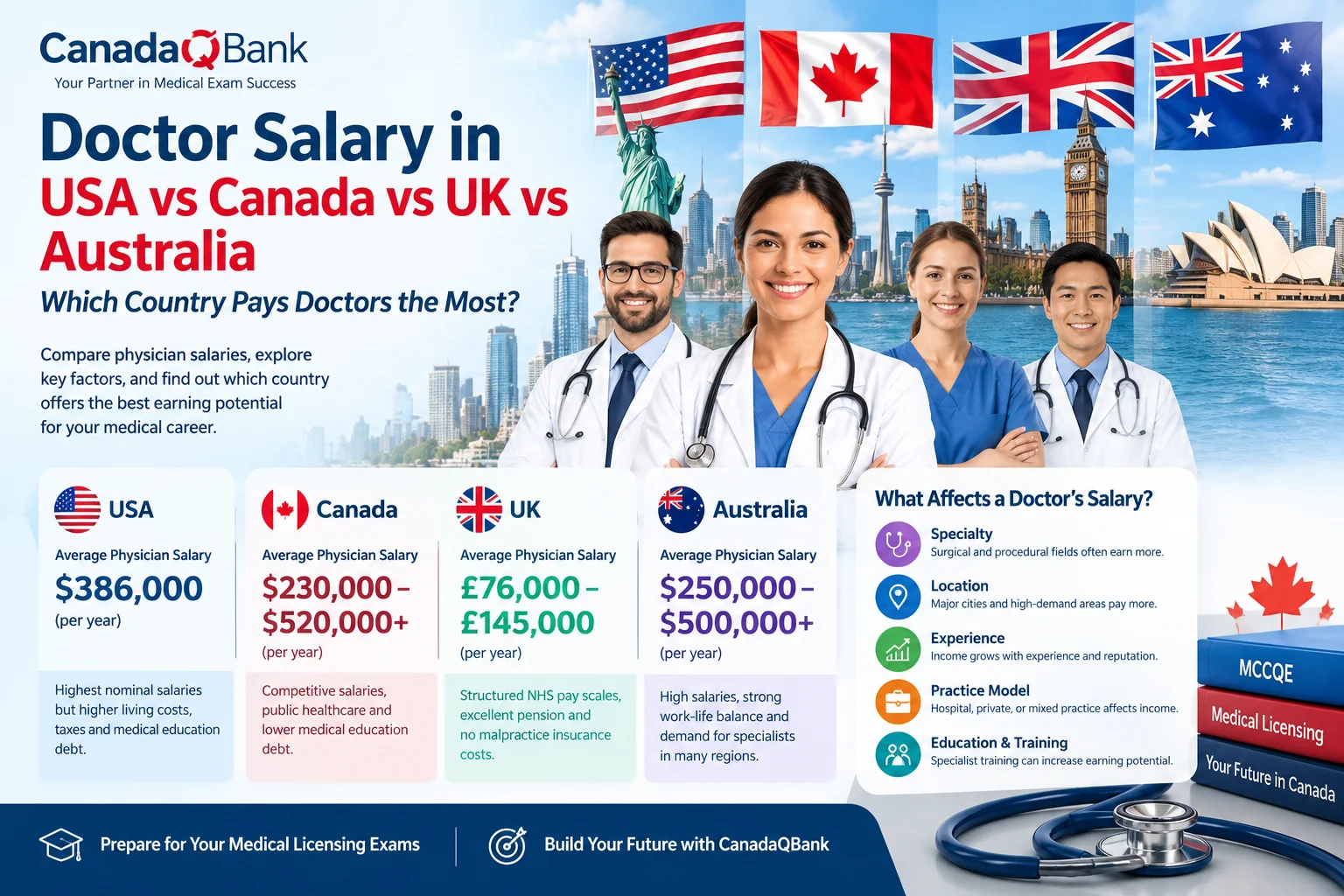
UK: The United Kingdom offers a modest salary for doctors and healthcare workers. The salary a doctor earns depends on their grade, level of training, and years of experience. Salaries range from £32,398 for doctors in foundation training to £104,085 for salaried GPs. There are allowances made for those who work overtime (more than 40 hours in a week) and those who work weekends.

Australia: In Australia, doctors earn well above the minimum wage. Salaries range from AUD 80,000 to AUD 207,000 per year but can be much higher for those with experience or in a specialised field.

7. Challenges

UK: The NHS and its staff are often understaffed, overworked, and underfunded. A recurring criticism the NHS faces is that patients usually face long waits for appointments, diagnostics, and elective procedures. There have been instances of patients being treated in suboptimal conditions such as “corridor care” or having to wait for months before they can access life-improving surgeries. The NHS is often criticised for its complex administrative processes and inefficient communication systems. Patients frequently report difficulties with appointment scheduling, chasing test results, or receiving delayed information.

Australia: Due to intense competition between doctors, there is a limited number of training positions available for both Australian-trained doctors and IMGs. This results in certain Australian cities being understaffed; health services face staffing challenges in serving remote areas, so new doctors are often given rural placements to make up for the lack. This can be an issue as the remote areas are teeming with wildlife that could get dangerous to those unfamiliar. Recent policies aimed at improving and easing the process of migrating doctors have generated concern among professional bodies who fear that it could lead to a decline in the quality of care provided.

Conclusion

Both Australia and the UK offer compelling—but distinct—environments for medical migrants. The UK’s long-established NHS provides an unmatched setting for gaining diverse clinical experience, while Australia’s robust incentives and favourable lifestyle offer higher earnings and a superior work-life balance. Nevertheless, each system has its challenges: the NHS struggles with resource constraints and workload pressures, and Australia faces concerns over training capacity, as well as integration issues.

Ultimately, the decision for a medical professional to migrate depends on individual priorities—whether one values the clinical depth of the NHS or the lifestyle and financial benefits available Down Under. Policymakers in both countries are continuously adjusting their strategies to balance domestic workforce needs with international recruitment, all while ensuring high standards of patient care and professional support.