


Choosing a medical specialty is a major decision for anyone planning a medical career in Canada. While personal interests, work-life balance, and patient care should guide your decision, earning potential is also an important factor.
Some medical specialties offer significantly higher earning opportunities than others. Surgeons, cardiologists, radiologists, and other specialists can earn substantial incomes, depending on their experience, location, workload, and practice arrangements.
In this guide, we explore the highest-paid doctors in Canada in 2026, compare estimated annual earnings across major specialties, explain the factors that affect physician income, and discuss how international medical graduates (IMGs) can work toward practising medicine in Canada.
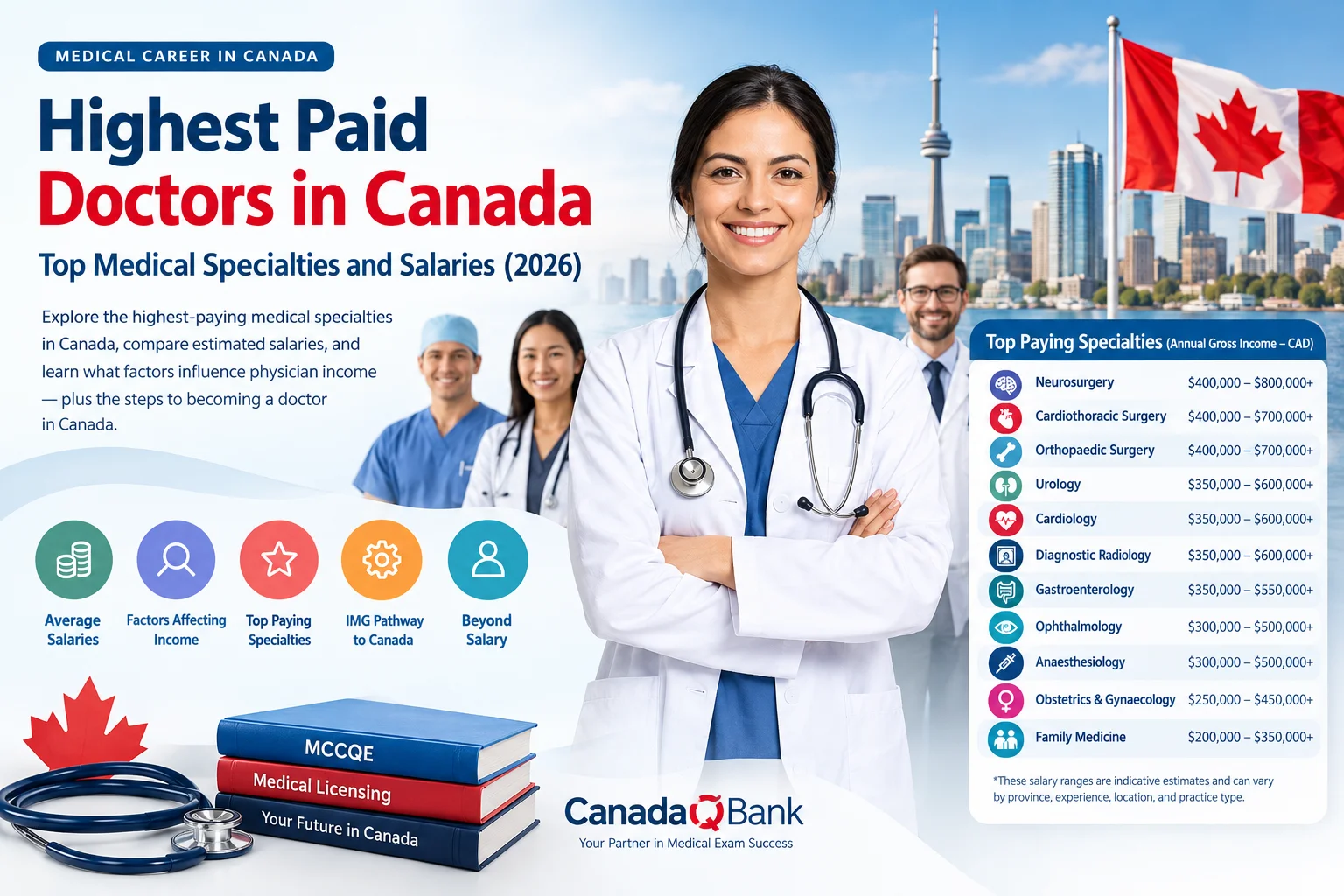
Highest-Paid Doctors in Canada: Salary Comparison for 2026
The following table provides broad, indicative estimates of annual gross clinical income for different medical specialties in Canada. These are approximate ranges for general editorial guidance, not verified national averages for 2026. Actual earnings can vary considerably by province, practice model, workload, and payment arrangement.
| Medical Specialty | Estimated Annual Gross Income (CAD) |
|---|---|
| Neurosurgery | $400,000–$800,000+ |
| Cardiothoracic Surgery | $400,000–$700,000+ |
| Orthopaedic Surgery | $400,000–$700,000+ |
| Urology | $350,000–$600,000+ |
| Cardiology | $350,000–$600,000+ |
| Diagnostic Radiology | $350,000–$600,000+ |
| Gastroenterology | $350,000–$550,000+ |
| Ophthalmology | $300,000–$500,000+ |
| Anaesthesiology | $300,000–$500,000+ |
| Obstetrics and Gynaecology | $250,000–$450,000+ |
| Family Medicine | $200,000–$350,000+ |
Important salary note: These ranges are indicative estimates, not confirmed 2026 salary averages. Physician compensation data may report gross clinical payments, professional income, or net income after practice expenses, which are not interchangeable. Verify the figures against the latest Canadian Institute for Health Information (CIHI) and provincial compensation data before publishing them as current statistics.
1. Neurosurgeons
Neurosurgery is among the most demanding medical specialties. Neurosurgeons diagnose and treat disorders affecting the brain, spinal cord, and nervous system, including brain tumours, spinal injuries, and certain neurological conditions that require surgery.
Because these procedures require extensive training, technical precision, and significant responsibility, neurosurgery can offer high earning potential.
What affects neurosurgeon income?
Years of specialist experience and professional reputation
The number and complexity of procedures performed
Hospital appointments and practice arrangements
Provincial compensation structures
Clinical workload and additional responsibilities
Neurosurgery also requires a long training pathway. Medical graduates must complete the relevant postgraduate training and meet provincial licensing requirements before practising independently.
2. Cardiothoracic Surgeons
Cardiothoracic surgeons operate on the heart, lungs, and other structures within the chest. Their work can include coronary artery bypass surgery, heart valve procedures, and surgery for certain lung conditions.
This specialty involves complex operations, close teamwork, and substantial clinical responsibility. These factors can contribute to strong earning potential.
However, income varies according to the surgeon’s workload, hospital role, compensation model, and province. The demands of the specialty also mean that prospective surgeons should consider training requirements and work-life balance, not salary alone.
3. Orthopaedic Surgeons
Orthopaedic surgeons diagnose and treat conditions affecting bones, joints, ligaments, muscles, and tendons. They may perform joint replacements, repair fractures, and treat sports injuries or spinal conditions.
Orthopaedics offers several subspecialty options, including:
Joint replacement surgery
Sports medicine and sports-related surgery
Spine surgery
Trauma surgery
Hand and upper-extremity surgery
Earnings can differ significantly depending on the surgeon’s subspecialty, procedure volume, and practice arrangements. Some surgeons work mainly in hospitals, while others combine hospital duties with additional clinical practice.
4. Urologists
Urologists treat conditions affecting the urinary tract and male reproductive system. Their work includes managing kidney stones, urinary problems, prostate conditions, and certain cancers.
Urology combines medical management, diagnostic procedures, and surgery. Specialists may develop expertise in areas such as oncology, reconstructive surgery, or minimally invasive procedures.
Income depends on the balance between clinical consultations, procedures, surgical work, and the compensation arrangements available in the province where the physician practises.
5. Cardiologists
Cardiologists diagnose and manage diseases affecting the heart and circulatory system. They treat conditions such as coronary artery disease, heart failure, arrhythmias, and hypertension.
Cardiology includes several areas of practice, such as:
General cardiology
Interventional cardiology
Electrophysiology
Heart failure management
Cardiac imaging
A cardiologist’s earnings depend on their subspecialty, clinical responsibilities, workload, and payment model. Physicians performing specialized procedures may have different compensation patterns from those focused mainly on consultations and long-term patient management.
6. Diagnostic Radiologists
Diagnostic radiologists interpret medical imaging, including X-rays, CT scans, MRI scans, and ultrasound examinations. Their work helps other physicians diagnose illnesses, assess injuries, and plan treatment.
Radiology is important across almost every area of medicine, from emergency care to cancer treatment.
Potential advantages of radiology include opportunities to focus on specific imaging areas, work in hospital or community settings, and participate in teleradiology where permitted. Income varies according to workload, reporting volume, subspecialty, and compensation arrangements.
7. Gastroenterologists
Gastroenterologists diagnose and treat conditions affecting the digestive system, including the oesophagus, stomach, intestines, liver, pancreas, and gallbladder.
Common conditions include inflammatory bowel disease, liver disorders, gastrointestinal bleeding, and digestive cancers. Many gastroenterologists also perform procedures such as endoscopy and colonoscopy.
Their income depends on their clinical workload, procedural responsibilities, practice structure, and provincial compensation arrangements.
8. Ophthalmologists
Ophthalmologists diagnose and treat diseases of the eyes and visual system. They manage conditions such as cataracts, glaucoma, retinal disorders, and other problems that may require medical or surgical treatment.
Some ophthalmologists focus on general eye care, while others specialize in areas such as retinal surgery, corneal disease, or paediatric ophthalmology.
Earnings vary according to subspecialty, surgical volume, patient demand, and the structure of the physician’s practice.
9. Anaesthesiologists
Anaesthesiologists provide anaesthesia and pain management for surgical procedures. They also help manage patients in critical care and other settings requiring advanced monitoring and support.
Their responsibilities include assessing patients before surgery, administering and monitoring anaesthesia, managing pain, and responding to emergencies.
Compensation depends on the number of clinical sessions, hospital responsibilities, on-call duties, and provincial payment arrangements.
10. Obstetricians and Gynaecologists
Obstetricians and gynaecologists provide care related to pregnancy, childbirth, and reproductive health. Their work can include prenatal care, delivery, gynaecological surgery, and the management of reproductive conditions.
Some specialists focus on high-risk pregnancies, fertility, gynaecological oncology, or minimally invasive surgery.
Income varies according to the balance between clinic visits, deliveries, procedures, surgical work, and on-call responsibilities.
11. Family Physicians
Family physicians provide ongoing, comprehensive care to individuals and families. They diagnose common illnesses, manage chronic conditions, provide preventive care, and refer patients to specialists when necessary.
Although family medicine may have a lower earning ceiling than some procedure-heavy specialties, it offers a wide range of career opportunities and practice settings.
A family physician’s income may depend on:
The number of patients seen
Fee-for-service, capitation, salary, or blended payment arrangements
Clinic operating expenses
Rural or urban practice location
Additional training and clinical services
Family medicine can be a rewarding choice for doctors who value continuity of care and long-term patient relationships.
What Determines a Doctor’s Salary in Canada?
A physician’s specialty is only one part of the earnings picture. Two doctors working in the same specialty may have very different incomes because of their location, workload, and practice arrangements.
1. Medical Specialty
Some specialties involve complex procedures, operating-room work, or highly specialized skills. These factors can affect compensation, but a specialty’s income ranking should not be treated as a guaranteed salary for every doctor.
2. Province and Location
Physician compensation and demand vary across Canada. Provinces and territories have different health systems, payment arrangements, and recruitment needs.
Rural and remote communities may offer recruitment incentives or other financial support for eligible physicians. These opportunities depend on the location, role, and applicable programme.
3. Experience and Subspecialty
Experienced physicians may have access to additional clinical responsibilities or more established practices. Subspecialty training can also influence the type of work a doctor performs and their earning opportunities.
However, additional training does not automatically guarantee higher income.
4. Payment Model
Canadian physicians may be paid through fee-for-service arrangements, alternative payment plans, salaries, capitation, or combinations of these models.
These payment structures affect how clinical activity translates into reported income.
5. Gross Income Versus Take-Home Income
This distinction is essential when comparing physician salaries.
Gross clinical income: Payments or billings associated with clinical services before relevant practice expenses.
Professional income: Income remaining after applicable professional practice expenses, depending on the data source’s definition.
Take-home income: The amount remaining after applicable expenses and personal taxes.
A physician reporting high gross billings may also have substantial costs, including staff wages, rent, equipment, insurance, and other practice expenses. Therefore, gross income should not be confused with personal earnings after expenses and taxes.
How Can International Medical Graduates Become Doctors in Canada?
Canada attracts medical graduates from many countries. However, earning a medical degree abroad does not automatically grant permission to practise medicine in Canada.
International medical graduates (IMGs) must meet the applicable examination, postgraduate training, credential verification, and provincial or territorial licensing requirements.
Step 1: Verify Your Medical Credentials
Review the requirements for international medical graduates and arrange the required verification of your medical credentials through the appropriate official process.
Requirements can vary according to your medical education, postgraduate training, and intended province of practice.
Step 2: Understand the Required Examinations
The Medical Council of Canada (MCC) administers examinations and other assessment processes relevant to medical licensing. Depending on your circumstances and pathway, you may need to complete examinations such as the Medical Council of Canada Qualifying Examination (MCCQE).
Always check the current requirements for your intended licensing pathway. Examination requirements and eligibility rules can change.
Step 3: Explore Residency and Other Licensing Pathways
Many IMGs pursue postgraduate residency training in Canada. Residency entry is competitive, and eligibility requirements may include examinations, credential verification, and other application criteria.
Some internationally trained physicians may qualify for alternative or practice-ready assessment pathways, depending on their previous training and the rules of the province or territory.
Step 4: Prepare for Licensing Examinations
A structured study plan can help candidates prepare for medical licensing examinations. Reviewing clinical concepts, practising exam-style questions, and identifying knowledge gaps can make preparation more focused.
CanadaQBank offers medical exam preparation resources that candidates can use to practise questions and review important concepts. Explore the available question banks at CanadaQBank.com and select resources appropriate to your examination.
Remember that question banks are study tools, not substitutes for official examination guidance or licensing requirements.
Is Choosing a Medical Specialty Based on Salary a Good Idea?
Salary is a reasonable factor to consider when planning a medical career, but it should not be the only one.
Before choosing a specialty, consider:
Interest: Do you enjoy the subject and the type of work involved?
Training: Are you prepared for the length and demands of the training pathway?
Lifestyle: Does the specialty fit your preferred working hours and personal responsibilities?
Patient care: Would you prefer long-term patient relationships, emergency care, procedures, or surgery?
Career opportunities: What are the employment and training opportunities in your preferred province?
Financial realities: How do training costs, practice expenses, and potential earnings compare?
A specialty that offers high earning potential may also involve long training, demanding schedules, and substantial responsibility. The best career choice is one that balances your professional interests, personal circumstances, and long-term goals.
Final Thoughts
Canada offers career opportunities across a wide range of medical specialties. Neurosurgery, cardiothoracic surgery, orthopaedic surgery, cardiology, radiology, and several other specialties can offer strong earning potential, while family medicine remains essential to the country’s healthcare system.
However, there is no single salary that every doctor in a specialty can expect to earn. Compensation depends on the province, practice model, clinical workload, experience, and expenses. The salary ranges in this article should therefore be treated as indicative estimates until checked against current, reliable Canadian data.
For international medical graduates, understanding credential verification, examination requirements, residency opportunities, and provincial licensing rules is just as important as choosing a specialty.
If you are preparing for the MCCQE or another medical examination, visit CanadaQBank to explore study resources that can support your exam preparation.